Denormalized data deliberately duplicates or flattens related facts so frequent reads avoid repeated joins, JSON parsing, or wide multi-table queries. It trades one authoritative copy for faster, simpler read paths. section 7.4
A read-optimized analytics table
Cal.com is mostly normalized: bookings, form responses, and fields live in separate tables. RoutingFormResponseDenormalized flattens their joined data into one wide table. A Postgres trigger keeps the copy fresh, allowing the analytics dashboard to filter without rejoining tables or parsing JSON on every page load. The cost is trigger maintenance and possible drift when synchronization fails. section 7.4
Figure 7.5 The Cal.com schema is mostly normalized, joining tables like booking, form_response, and form_field. The routing_form_denormalized table is the exception: a wide, flat copy of the joined data, kept fresh by a Postgres trigger. This lets the analytics dashboard query a single table instead of re-joining the originals and parsing JSON on every page load.
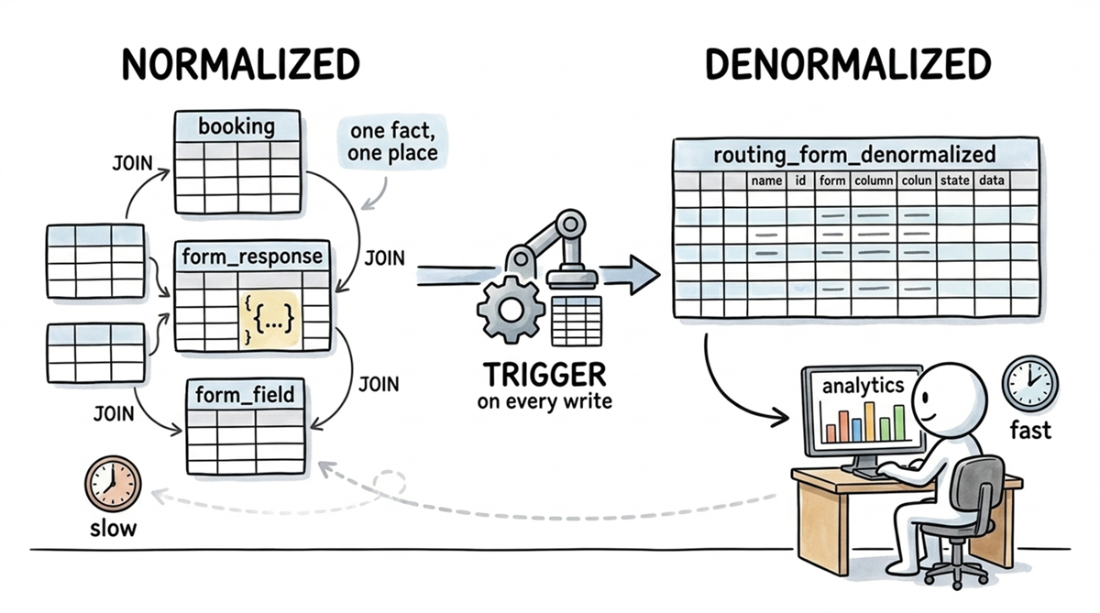
Use the schema figure to compare normalized joins with the wide, trigger-maintained denormalized table and see which read work it removes. section 7.4







