A dependency graph represents operations as nodes and execution dependencies as directed edges. It distinguishes genuine sequential work from independent operations that can run in parallel. section 4.4.1
Use a dependency graph to shorten the critical path:
- Draw each request or operation as a node. section 4.4.3
- Add arrows showing which responses or results each operation needs. section 4.4.1
- Run nodes with no path between them in parallel; keep genuinely dependent nodes sequential. section 4.4.1
- Move nonessential work off the critical path through deferral, batching, or prefetching. section 4.4.3
Team dashboard
After obtaining a user ID, fetch the profile, notifications, and recent activity concurrently. Fetch team metrics only after the profile supplies the team ID. This removes the artificial waterfall caused by waiting for the profile before starting independent requests. section 4.4.1
Figure 4.3 A team dashboard dependency graph after optimization.
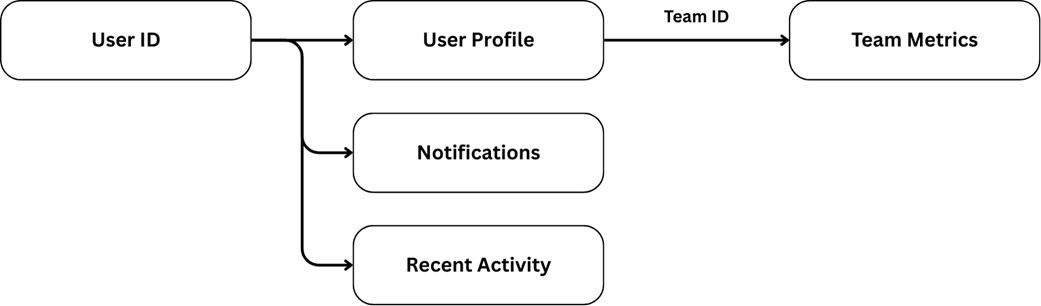
The optimized dependency graph makes the parallel branches and the single profile-dependent request visible. section 4.4.1








