A design pattern is an industry-proven model for creating a custom solution to a recurring software architecture problem. It operates above individual design principles: principles improve code and patterns organize those improvements into reusable architectural approaches. section 1.1 section 1.0
Patterns address change and complexity rather than prescribing rigid rules. Good design keeps changes localized, but flexibility can also increase complexity, so selecting a pattern requires trade-offs and iterative refinement. section 1.7 section 1.9
Common architecture situations illustrate what a pattern contributes:
- Publisher–subscriber separates a component that produces data from components that consume it; the Observer Design Pattern provides a solution model. section 1.4.5
- Singleton models a collection containing one object, Composite models a hierarchy treated uniformly, and Decorator adds responsibilities at run time without changing the decorated class. section 14.0
Figure 1.2 Publisher–subscriber is a common software architecture problem. One application component produces data that other application components consume. The Observer Design Pattern provides a model to solve this problem.
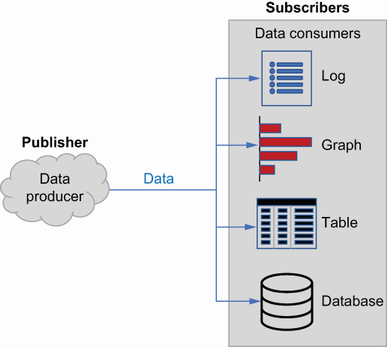
Use the publisher–subscriber diagram to see how one producing component connects with multiple consuming components before applying the Observer model. section 1.4.5






