A design pattern is a reusable solution structure for recurring software-design problems. Naming patterns gives teams a shared vocabulary for discussing objects, components, and their interactions. section 11.2
Patterns can improve loose coupling and extensibility, but they are tools rather than rules. If a pattern feels forced, a simpler or more idiomatic Python approach may be better. section 11.2 section 11.2.1
Command pattern in Bark
A menu choice triggers an action without directly depending on its implementation: PersistenceLayer classes act as receivers, Command classes hold the required information, Option instances invoke commands, and the client connects everything. section 11.2
Useful starting terms include:
- Creational design patterns and factories section 11.2.2
- Behavioral design patterns and the command pattern section 11.2.2
- Structural design patterns and the adapter pattern section 11.2.2
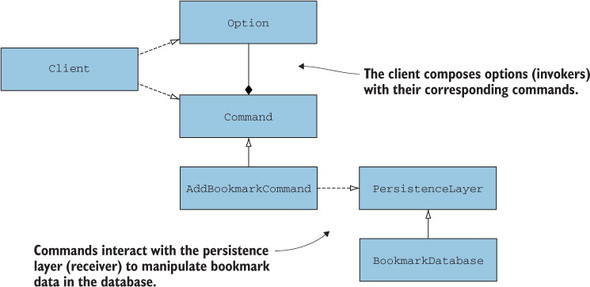
Use the UML diagram to inspect how receivers, commands, invokers, and the client relate in the command pattern. section 11.2






