Principle
A principle is a general rule, guideline, or value that guides decisions, behavior, or judgments.
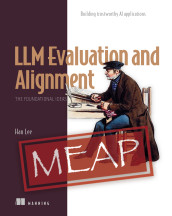
LLM Evaluation and Alignment, The Foundational Ideas
A constitutional principle is an abstract behavioral or ethical rule that an AI system is expected to follow.
- How it is used
- Guides AI critics to critique, revise, and compare responses against explicit behavioral rules.
- How deep it goes
- Explains principle selection and critique-revision steps, then examines coverage gaps, stylistic leakage, and inconsistent interpretation.
- Examples
- Uses harmlessness prompts and an arson-related response to illustrate critique and revision.
- What you can do after
- Evaluate and understand how explicit rules shape synthetic training feedback and where their application can fail.
Read how LLM Evaluation and Alignment, The Foundational Ideas explains principle →
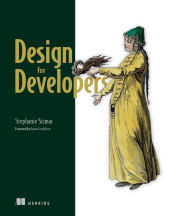
Design for Developers
A general guideline for directing decisions about the visual and experiential qualities of a product or interface.
- How it is used
- Guides content relationships, hierarchy, and layout before wireframing and visual styling.
- How deep it goes
- Names five foundational principles and explains their role, while deferring the step-by-step web-page exercise.
- Examples
- Compares a planned house with consistent proportions to one built without a plan to illustrate website layout.
- What you can do after
- Build it from scratch: shape a project-specific design system rather than relying on a third-party framework.
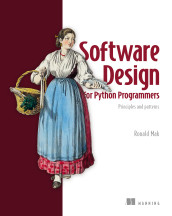
Software Design for Python Programmers
A design principle is a general guideline for structuring software to improve qualities such as flexibility, correctness, and performance.
- How it is used
- Guides functions, classes, and collaborating classes toward sustainable software that handles changing requirements.
- How deep it goes
- Develops principles through before-and-after examples, iteration, implementation hiding, and tradeoffs, without prescribing one complete architecture.
- Examples
- Uses basic-feature Python programs, before-and-after comparisons, requirement changes, and iterative refactoring with backtracking.
- What you can do after
- Evaluate and improve code by isolating change, reducing dependencies, managing complexity, and selecting supporting design patterns.
Read how Software Design for Python Programmers explains principle →
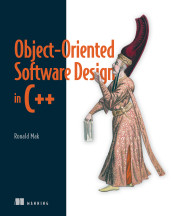
Object-Oriented Software Design in C++
A design principle is a general guideline for structuring software to improve qualities such as flexibility and maintainability.
- How it is used
- Improves code and class designs while guiding iterative development toward flexible, maintainable applications.
- How deep it goes
- Explains application across lines, functions, classes, and class groups, then connects principles to encapsulation, coupling, and patterns.
- Examples
- Uses before-and-after C++ programs, iterative application development, requirements analysis, implementation hiding, and backtracking over poor decisions.
- What you can do after
- Apply design principles to improve code, manage change and complexity, and refine applications through iteration and backtracking.
Read how Object-Oriented Software Design in C++ explains principle →
Reinforcement Learning from Human Feedback
A principle is a rubric criterion expressing a desirable quality that guides evaluation without being an absolute requirement.
- How it is used
- Guides rubric-based evaluation, synthetic feedback, preference judgments, and model-behavior specification.
- How deep it goes
- Defines principles through rubric examples and contrasts them with hard rules, but does not formalize a scoring algorithm.
- Examples
- Uses museum-exhibit criteria for precision, engagement, selection, consistency, and distinctness.
- What you can do after
- Evaluate responses by writing weighted, testable criteria that distinguish desirable qualities from hard requirements.
Read how Reinforcement Learning from Human Feedback explains principle →
Also covered in
- Functional Design and Architecture: Examples in Haskell
- Tech Startup Toolkit
- First-Party Data Activation
- Everyday Data Visualization
- Architecting for AutonomyIn early access (MEAP)
- Grokking Simplicity
What to know first
- object-oriented programmingObject-oriented programming is a programming paradigm that organizes software around objects combining state and behavior, often using encapsulation, classes, inheritance, or polymorphism.
- requirementsA requirement is a stated need, capability, quality, condition, or constraint that a system, product, solution, or project is expected to satisfy.
- complexityComplexity is the degree to which interacting elements or factors make a system or problem difficult to understand, predict, change, operate, or solve.
- Constitutional AIConstitutional AI is an alignment approach that guides model behavior by evaluating or shaping it according to an explicit set of principles.
Related concepts
- single responsibility principleincludes · The single responsibility principle is a software design principle that gives each component one focused responsibility and one primary reason to change.
- techniquekind of · A technique is a deliberate, systematic, and repeatable method for performing a task, solving a problem, or achieving a desired result.
- accountabilityincludes · Accountability is the obligation to answer for decisions, actions, and outcomes, including explaining them and accepting responsibility for their consequences.
- data controlincludes · Data control is an individual’s ability to decide how personal data is shared, used, managed, or monetized.
- constitution-as-code documentpart of · A constitution-as-code document is a written set of principles and behavioral constraints used to guide or evaluate an AI system’s behavior.
- cultureconfigures · Culture is the shared values, beliefs, norms, meanings, and practices that shape behavior within a social group or organization.
Questions about principle
What is principle?
A principle is a general rule, guideline, or value that guides decisions, behavior, or judgments.
Which Manning books explain principle?
LLM Evaluation and Alignment, The Foundational Ideas, Design for Developers, Software Design for Python Programmers, Object-Oriented Software Design in C++ and Reinforcement Learning from Human Feedback.
What should I know before learning principle?
Manning books that teach principle usually introduce object-oriented programming, requirements, complexity and Constitutional AI first.
What kinds of principle are there?
Kinds of principle include single responsibility principle, accountability and data control.
What is principle a kind of?
Principle is a kind of technique. A technique is a deliberate, systematic, and repeatable method for performing a task, solving a problem, or achieving a desired result.
What is principle part of?
Principle is part of constitution-as-code document. A constitution-as-code document is a written set of principles and behavioral constraints used to guide or evaluate an AI system’s behavior.
These guides are generated from the text of Manning books by Manning's knowledge graph and link to the sections they draw on. The full books are available on liveBook and at manning.com.