Developer experience (DevEx) is the quality of developers’ interactions with tools, resources, workflows, and platforms. In platform engineering, it is the customer outcome the platform product strategy is designed to improve. section 1.4.1
Effective developer experience reduces friction while preserving autonomy, consistency, and trust:
- Simplify infrastructure complexity so developers can focus on coding and innovation rather than underlying technical details. section 10.2.5
- Provide self-service capabilities for provisioning resources and deploying applications without platform-team bottlenecks. section 10.2.5
- Standardize configurations, tools, and workflows to support software quality, security, governance, and compliance. section 1.4.1 section 10.2.5
- Treat internal platforms as products: define user-centric outcomes, prioritize a roadmap, gather feedback, and measure effectiveness. section 10.2.5 section 1.4.1
Epetech’s developer-centric platform
Epetech used a platform-as-a-product mindset to abstract infrastructure, enable self-service provisioning and deployment, and enforce consistent configurations. The result was faster development, increased productivity and innovation, and developers who felt supported, valued, and trusted. section 10.2.5
Figure 3.2 A decision tree for engineering platform buildout
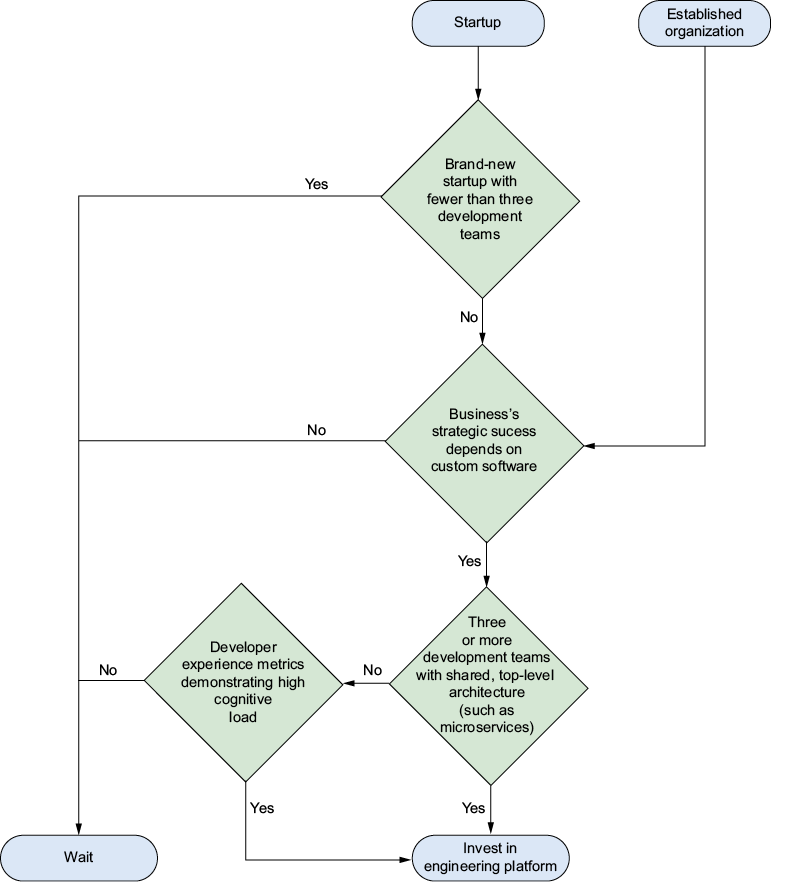
Use the decision tree to judge whether platform investment is appropriate based on organizational growth, team structure, shared architecture, cognitive load, and developer experience metrics. section 3.1.2





