Developer productivity
Developer productivity is the amount or value of useful software work developers produce relative to the time, effort, or resources required.

Think Like a Software Engineering Manager
A measure of output produced relative to the time, effort, or resources used, applied here to a team.
- How it is used
- Frames engineering management as improving team output while keeping work aligned with goals and supporting engineers.
- How deep it goes
- Illustrates a task-count increase and gives management practices, but does not establish a general productivity metric.
- Examples
- Uses a six-engineer task-count comparison and a sample calendar with focus blocks and breaks.
- What you can do after
- Practice/perform it by identifying barriers to priority work and adjusting team practices and calendar time.
Read how Think Like a Software Engineering Manager explains developer productivity →

Lead Developer Career Guide
The amount of useful work or output produced relative to the resources or time consumed.
- How it is used
- Frames productivity as making room for learning and improving software development through focused work and coding assistance.
- How deep it goes
- Gives focus and scheduling tactics, then weighs AI coding benefits against dependence, security, and correctness risks.
- Examples
- Uses a weekly learning calendar, short study sessions, notification-free focus, and AI-generated code suggestions.
- What you can do after
- Apply productivity tactics by scheduling study, limiting interruptions, and reviewing AI suggestions for quality and security.
Read how Lead Developer Career Guide explains developer productivity →
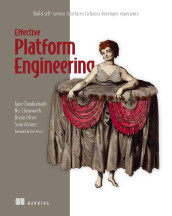
Effective Platform Engineering
Developer productivity is a measure of the value and progress developers produce relative to the effort and resources involved.
- How it is used
- Measures whether platform engineering improves developer flow, adoption, autonomy, reliability, satisfaction, and business value.
- How deep it goes
- Provides a measurement framework spanning delivery, adoption, quality, reliability, autonomy, and satisfaction rather than prescribing a single metric.
- Examples
- Uses lead time, deployment frequency, wait time, adoption, self-service, incident recovery, telemetry, satisfaction, code quality, and test coverage.
- What you can do after
- Evaluate platform value by relating productivity metrics to faster delivery, improved reliability, adoption, satisfaction, and business outcomes.
Read how Effective Platform Engineering explains developer productivity →
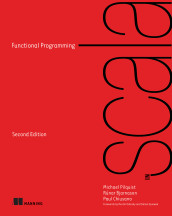
Functional Programming in Scala, Second Edition
Productivity is the property that each finite portion of a potentially infinite result can be computed in finite time.
- How it is used
- Uses productivity to justify safely generating and querying infinite LazyList values.
- How deep it goes
- Defines productivity, contrasts recursion with corecursion, and explains unfold's generation condition without developing deeper theory.
- Examples
- Demonstrates productivity with ones, finite prefixes, exists, unfold-based generators, and LazyList transformations.
- What you can do after
- Build it from scratch by implementing productive LazyList generators and transformations with unfold.
Read how Functional Programming in Scala, Second Edition explains developer productivity →

Vibe Engineering
Developer productivity is the quantity, quality, or timeliness of software-development output produced by a developer or team.
- How it is used
- Evaluates AI coding practices through output, timing, cost, and observable workflow behavior.
- How deep it goes
- Combines team-level tool-selection rules with experimental evidence, but stops short of proving AI causation from productivity metrics.
- Examples
- Uses agent-mode policy changes, inline edits, API overage, pull-request cycle time, and a randomized trial of experienced developers.
- What you can do after
- Evaluate AI-assisted workflows with observable metrics and choose tool modes according to task scope and setup cost.
Also covered in
- The Art of AI Product Development
- Kubernetes for Developers
- React in Depth
- The Design of Web APIs, Second Edition
- Quarkus in Action
- Rust in Action: Systems programming concepts and techniques
- Introduction to Generative AI, Second Edition
- Fast by DefaultIn early access (MEAP)
- Interview Speak
What to know first
- costCost is the monetary expenditure or other resource burden incurred to acquire, produce, operate, or perform something.
- meanThe mean is a measure of central location equal to the arithmetic average of numerical observations, or the probability-weighted average of a random variable’s possible values.
Related concepts
- multitaskingcontrasts with · Multitasking is the concurrent or apparently concurrent management of multiple tasks by sharing, interleaving, or switching among execution resources.
- interruptproduced by · An interrupt is an event or signal that breaks ongoing activity and redirects execution or attention so a condition can be handled.
- individual performancecontrasts with · Individual performance is the quality and effectiveness with which one employee operates within a team and organizational context.
- performance managementproduced by · Performance management is the process of supporting employee performance through expectations, assistance, feedback, and improvement.
Questions about developer productivity
What is developer productivity?
Developer productivity is the amount or value of useful software work developers produce relative to the time, effort, or resources required.
Which Manning books explain developer productivity?
Think Like a Software Engineering Manager, Lead Developer Career Guide, Effective Platform Engineering, Functional Programming in Scala, Second Edition and Vibe Engineering.
What should I know before learning developer productivity?
Manning books that teach developer productivity usually introduce cost and mean first.
What is the difference between developer productivity and multitasking?
Developer productivity is the amount or value of useful software work developers produce relative to the time, effort, or resources required. Multitasking is the concurrent or apparently concurrent management of multiple tasks by sharing, interleaving, or switching among execution resources.
These guides are generated from the text of Manning books by Manning's knowledge graph and link to the sections they draw on. The full books are available on liveBook and at manning.com.