Cost
Cost is the monetary expenditure or other resource burden incurred to acquire, produce, operate, or perform something.

Vibe Engineering
The total monetary, computational, operational, and human-review expense incurred in obtaining a system output.
- How it is used
- Frames cost as a production design constraint when selecting context, models, and workflows for AI-assisted systems.
- How deep it goes
- Works through cost categories, benchmark extrapolation, optimization steps, and diminishing returns, with explicit assumptions about hidden wait time.
- Examples
- Uses a text-to-SQL context benchmark, a development-team spending breakdown, and an agent retry loop triggered by a flaky test.
- What you can do after
- Evaluate AI spending against quality and delivery, estimate scaled operating costs, and identify optimizations whose savings justify their effort.
Bayesian Optimization in Action
Querying cost is the computational, monetary, or resource expense incurred by evaluating an objective at a specified fidelity.
- How it is used
- Balances expensive target evaluations against cheaper approximations during multifidelity Bayesian optimization.
- How deep it goes
- Defines fidelity-dependent cost, develops a linear model, and uses inverse-cost information weighting; notes that nonlinear BoTorch models are possible.
- Examples
- Uses low- and high-quality simulations and a Forrester-function approximation with fidelity costs of 0.5 and 1.
- What you can do after
- Apply it via BoTorch cost models and inverse-cost utility to select cost-effective multifidelity queries.
AI Model Evaluation
Cost measures the computational, financial, or resource expenditure required to operate a model or system.
- How it is used
- Uses cost to assess production readiness and keep model evaluation affordable at scale.
- How deep it goes
- Explains cost drivers, tracking practices, guardrails, and model-selection trade-offs without developing a detailed costing formula.
- Examples
- Illustrates a two-tier judge workflow and an A/B test where a click-through improvement doubles GPU cost.
- What you can do after
- Operate and configure cost monitoring and guardrails for model serving and evaluation pipelines.

Machine Learning System Design
Compute cost is the computational resource expenditure required to execute a model or system operation.
- How it is used
- Guides inference-pipeline design by weighing resource expenditure against load, model value, latency, throughput, and reliability.
- How deep it goes
- Explains scaling, device placement, architecture, and accuracy tradeoffs, but stops short of detailed cost formulas or infrastructure budgeting.
- Examples
- Uses low-end GPU overload, mixed CPU-GPU serving, device-side inference, and model-size accuracy comparisons.
- What you can do after
- Evaluate inference designs by estimating scaling behavior and selecting a model-platform balance that meets operational requirements.

LLM Customization and Fine-Tuning
The money required to train, operate, or maintain a model.
- How it is used
- Frames model adaptation and platform selection around production spending, request volume, and maintenance effort.
- How deep it goes
- Breaks costs into request-level, upfront, and ongoing components, with illustrative break-even calculations and exclusions.
- Examples
- Compares shot counts, a 4B fine-tuning project, and a 12-month distilled-student deployment.
- What you can do after
- Evaluate adaptation and hosting options by estimating volume-sensitive costs, staff effort, break-even, and retained quality.

Agent Design Patterns
Cost is the expenditure associated with operating an AI agent, summarized here primarily by resource usage or monetary charges.
- How it is used
- Positions cost as a design criterion for choosing agent processes and evaluating design patterns.
- How deep it goes
- Distinguishes computational efficiency from predictive performance and identifies fragment overhead, but gives no cost formula or accounting procedure.
- Examples
- Contrasts expensive reasoning searches with quick resource selection and notes per-fragment overhead when processing large inputs.
- What you can do after
- Evaluate/understand cost trade-offs when choosing agent processes or decomposing large inputs.
Grokking Bayes
Cost is the expenditure or undesirable consequence incurred when implementing an intervention.
- How it is used
- Uses cost to account for undesirable outcomes and intervention expenses when comparing actions under uncertainty.
- How deep it goes
- Defines cost, relates it to utility, and subtracts it from utility to calculate net utility.
- Examples
- Compares website-launch outcomes and job-training policies with different costs, utilities, and probabilities.
- What you can do after
- Evaluate interventions by subtracting their costs from utility and comparing expected net utility.
Algorithms Every Programmer Should Know
A cost is a quantity representing the expense or disadvantage associated with a preference or match.
- How it is used
- Uses costs to compare preference matches and choose a one-to-one worker–task assignment with minimum total expense.
- How deep it goes
- Represents each worker–task pairing with a fixed cost based on distance, resources, or time.
- Examples
- Uses university distance, chores, and developer-module hours to illustrate matching costs.
- What you can do after
- Evaluate assignments by adding their pairing costs and identifying the lowest-cost total.
Read how Algorithms Every Programmer Should Know explains cost →
Grokking Algorithms, Second Edition
A cost is a numerical amount representing the time, distance, or other expense associated with reaching a node or traversing an edge.
- How it is used
- Tracks the expense of reaching each node so Dijkstra’s algorithm can find a cheapest route.
- How deep it goes
- Works through a costs table and implements its updates in Python, including unknown costs represented by infinity.
- Examples
- Uses paid trades toward a piano and a timed route from Start to Finish.
- What you can do after
- Build it from scratch in Python by storing edge costs, updating node costs, and recording parents for the cheapest route.
Read how Grokking Algorithms, Second Edition explains cost →

Microsoft Azure in Action
Cost is the monetary amount incurred for consuming cloud resources or services.
- How it is used
- Frames Azure service and architecture choices as budget decisions alongside compute, networking, and storage.
- How deep it goes
- Works through a service-level monthly estimate and concrete VM savings options, without cataloging every price or pricing tier.
- Examples
- Uses an image-resizing application’s $36.94 monthly estimate and VM choices such as auto shutdown, Spot Instances, and reserved instances.
- What you can do after
- Operate/configure it by enabling VM auto shutdown, assessing Spot or reserved instances, and checking the displayed price before creation.

Digital Twins in Action
Cost is the monetary or resource expenditure required to operate, store, transfer, or compute within a system.
- How it is used
- Evaluates digital twin investments and controls recurring expenditure against delivered value.
- How deep it goes
- Breaks down build, operating, inference, and compliance costs, then identifies operational levers and attribution practices.
- Examples
- Compares a home energy agent running every 15 minutes with a low-cost HVAC rule and potential electricity savings.
- What you can do after
- Evaluate digital twin costs against expected benefits and identify ways to reduce recurring expenditure.
Building Reliable AI Systems
The monetary expense of using an API service, typically based on usage.
- How it is used
- Frames token-based expense as a production deployment and monitoring concern.
- How deep it goes
- Develops request-level measurement and anomaly detection, including baseline comparisons and likely causes.
- Examples
- Uses a support interaction with 1,247 tokens and a request lifecycle with inference and infrastructure costs.
- What you can do after
- Diagnose spending increases using request logs, historical baselines, and likely causes.
Grokking AI Algorithms, Second Edition
Computational cost is the processing effort required by a function or algorithm, commonly measured by operations or execution time.
- How it is used
- Frames algorithm selection and LLM architecture design as trade-offs involving processing effort, scaling, memory, hardware, and latency.
- How deep it goes
- Defines Big O through constant, linear, and quadratic examples, then compares compute cost with memory, hardware efficiency, energy, and latency.
- Examples
- Uses handshaking analogies, list iteration, pairwise comparison, and large-language-model training on GPU clusters.
- What you can do after
- Evaluate algorithms and model architectures by comparing operation growth, hardware demands, energy use, memory needs, and latency.
Read how Grokking AI Algorithms, Second Edition explains cost →

AI Agents and Applications
The expense incurred when running a trained model to produce outputs, commonly calculated from usage such as processed or generated tokens.
- How it is used
- Guides model selection and workflow design by balancing inference expense against accuracy and response speed.
- How deep it goes
- Compares model size, per-token charges, and task routing without detailing a full cost-accounting procedure.
- Examples
- Uses customer-support chatbots, legal-document analysis, and GPT-5 model routing as concrete cost trade-off examples.
- What you can do after
- Apply via LangChain by selecting models and routing tasks according to accuracy, speed, and cost requirements.
Delivering Machine Learning Projects: From design to deployment
Cost is the monetary expense associated with deploying or operating a model and its required components.
- How it is used
- Frames cost as a nonfunctional requirement that can determine model selection and production feasibility.
- How deep it goes
- Defines cost, identifies licensed components and execution volume, and stops short of a detailed pricing or estimation method.
- Examples
- Uses licensed subcomponents and millions of classifier executions to illustrate how deployment choices create expense.
- What you can do after
- Evaluate model candidates against execution volume, infrastructure expense, and competing nonfunctional requirements before deployment.
Read how Delivering Machine Learning Projects: From design to deployment explains cost →
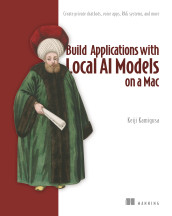
Build Applications with Local AI Models on a Mac
The monetary expense of operating an AI system, including service charges and local operating expenses.
- How it is used
- Guides the choice between cloud services and local AI, particularly for agents that make many calls.
- How deep it goes
- Explains subscription, token, hardware, and electricity costs, and gives a method for estimating API charges from input and output volumes.
- Examples
- Compares Claude and MiniMax API charges for equal token volumes and contrasts those charges with local hardware and electricity costs.
- What you can do after
- Evaluate hosted and local deployment costs using measured token usage, tool charges, hardware, energy, task quality, and latency.
Read how Build Applications with Local AI Models on a Mac explains cost →
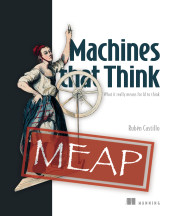
Machines that Think
Cost is the resource expenditure required to train, evaluate, deploy, or operate a computational system.
- How it is used
- Frames the material demands of large language models as constraints on feasibility, deployment, and research direction.
- How deep it goes
- Connects training and deployment expense to design choices and research constraints, without quantifying costs.
- Examples
- Contrasts small-model testing with costly frontier-scale evaluation and favors predictable, hardware-compatible approaches.
- What you can do after
- Evaluate how affordability and infrastructure shape viable model designs, experiments, and research directions.
Also covered in
- Software Architecture Decision-MakingIn early access (MEAP)
- Tech Startup Toolkit
- Data Analysis with LLMs
- Build a Text-to-Image Generator (from Scratch)
- Investing for Programmers
- Cloud Observability in Action
- Snowflake Data Engineering
- Architecting for AutonomyIn early access (MEAP)
- AI Agents in Action
- Learn AI-Assisted Python Programming, Second Edition
- Designing AI AgentsIn early access (MEAP)
- Infrastructure as Code, Patterns and Practices: With examples in Python and Terraform
What to know first
- language modelA language model is a computational model that represents patterns in linguistic sequences to assign probabilities, predict, generate, or evaluate language.
- tokenA token is a discrete unit of text, such as a word, subword, punctuation mark, or symbol, produced by tokenization and processed by a language model.
- AI agentAn AI agent is a computational system that uses artificial intelligence to interpret information and select or perform actions toward goals while interacting with an environment.
- meanThe mean is a measure of central location equal to the arithmetic average of numerical observations, or the probability-weighted average of a random variable’s possible values.
Related concepts
- revenuecontrasts with · Revenue is the income an organization earns from its business activities before expenses are deducted.
- entropyused by · Entropy is an information-theoretic measure of uncertainty in a probability distribution, defined as the expected value of the negative logarithm of outcome probability.
- income statementpart of · An income statement is a financial statement that reports a company’s revenues, expenses, and resulting profit or loss over a period.
- local aipart of · Local AI is artificial-intelligence computation performed by a model on a user's device or other locally controlled infrastructure rather than through a remote service.
Questions about cost
What is cost?
Cost is the monetary expenditure or other resource burden incurred to acquire, produce, operate, or perform something.
Which Manning books explain cost?
Vibe Engineering, Bayesian Optimization in Action, AI Model Evaluation, Machine Learning System Design, LLM Customization and Fine-Tuning, Agent Design Patterns, Grokking Bayes, Algorithms Every Programmer Should Know and 9 more.
What should I know before learning cost?
Manning books that teach cost usually introduce language model, token, AI agent and mean first.
What is the difference between cost and revenue?
Cost is the monetary expenditure or other resource burden incurred to acquire, produce, operate, or perform something. Revenue is the income an organization earns from its business activities before expenses are deducted.
What kinds of cost are there?
Kinds of cost include electricity cost.
What is cost part of?
Cost is part of income statement. An income statement is a financial statement that reports a company’s revenues, expenses, and resulting profit or loss over a period.
These guides are generated from the text of Manning books by Manning's knowledge graph and link to the sections they draw on. The full books are available on liveBook and at manning.com.