An income statement reports a company’s performance over a quarter or year by showing revenue, expenses, and net income. Net income equals revenue minus expenses and indicates profit or loss. section 2.1.1
Use it to study how a business earns and spends money over time. Investors often compare the same quarter across different years because seasonal conditions can distort results, especially for retailers. section 2.1.1
Read the statement through three primary components:
- Revenue records total income from sales or services. section 2.1.1
- Expenses record the costs incurred to generate revenue, such as employee salaries or research and development. section 2.1.1
- Net income shows the resulting profit or loss and helps investors assess whether revenue and earnings are growing. section 2.1.1
Consulting-firm analysis
A simplified consulting firm earns revenue from services, pays billable employees, and invests in training and certification through R&D. A sharp increase in R&D expenses can prompt hypotheses about changing operations or financing, but the statement alone does not establish the cause. section 2.1.1
Figure 2.2 A simplified model of a consulting company that makes its money on selling services and spends most of it on employee salaries
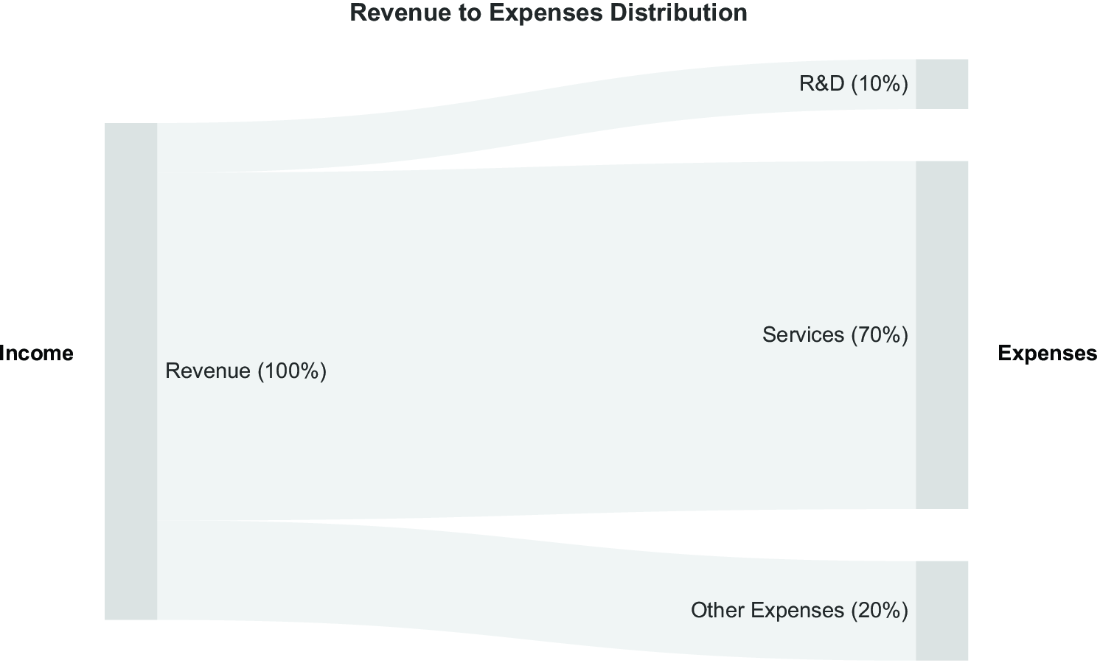
Use the consulting-company model to connect service revenue, employee salaries, and spending decisions in a single visual structure. section 2.1.1
