liveBook · Manning

Net income

As explained in Investing for Programmers

Net income is the profit remaining after a company deducts expenses, interest, taxes, and other applicable charges from its income.

Net income is revenue minus expenses, indicating the profit or loss remaining for a period. Income statements report it for a quarter or year. section 2.1.1

Evaluate it across comparable periods rather than in isolation: seasonal businesses may depend heavily on Q4, while flat income loses real value over time through inflation. section 2.1.1

Use net income to frame practical questions:

  • Is revenue and net income increasing over time? section 2.1.1
  • Which expenses explain a significant change? section 2.1.1
  • Does a reported increase reflect stronger operations or additional financing? section 2.1.1
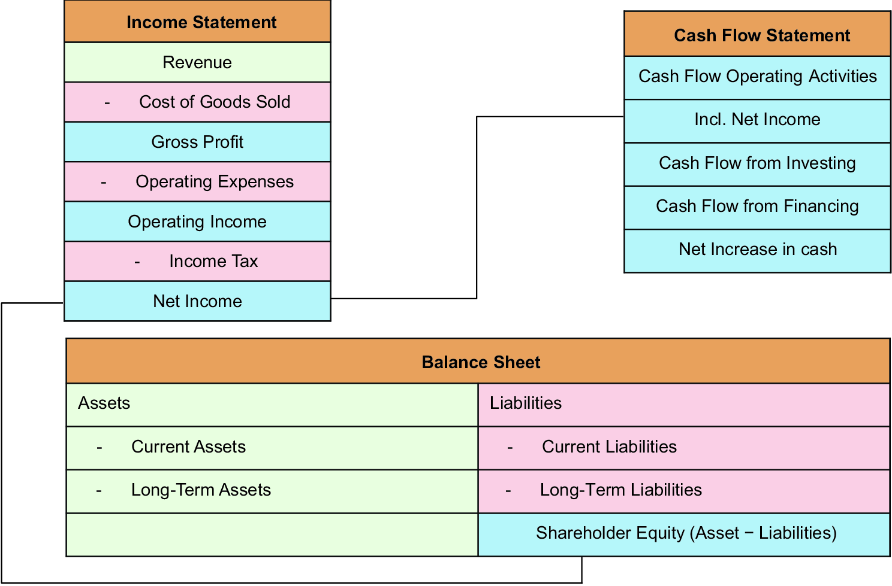
Figure 2.1 This illustrates a simplified relationship between the accounting statement and its interconnection.
figure

Use the accounting-statement relationship diagram to place net income alongside revenue, expenses, and related financial statements. section 2.1.1

How Investing for Programmers covers it

How deep it goes
Defines the revenue-minus-expenses calculation and applies it to trends, seasonality, inflation, and expense changes.
Examples
Examines quarterly comparisons, Christmas-season effects, and a consulting firm model with salaries, services, and R&D spending.
What it assumes
Teaches the basic income-statement components from revenue and expenses before interpreting profit or loss.
What you can do after
Evaluate company performance by comparing net income over time and investigating the expenses behind material changes.
How it connects
Links net income to income statements, revenue, expenses, seasonality, inflation, and time value of money.

Related concepts

This explainer was generated by Manning's knowledge graph from the text of Investing for Programmers. The section links point to the parts of the book it draws on.