A cost measures the expense or disadvantage of a match. In allocation, each worker–task pairing has a cost, such as distance, resources, or time; the goal is to choose pairings with the lowest total cost. section 3.1
Putting costs to work
A student could weigh university preferences using distance, while a company could compare the hours developers need to complete different modules. section 2.3.4 section 3.1
Figure 3.1 Cost matrix is created with the rows representing the workers and the columns representing the tasks. The values in the matrix denote the cost to complete the task. The cost can be replaced by other factors based on the use case like time taken, amount of work, or any other measurable value.
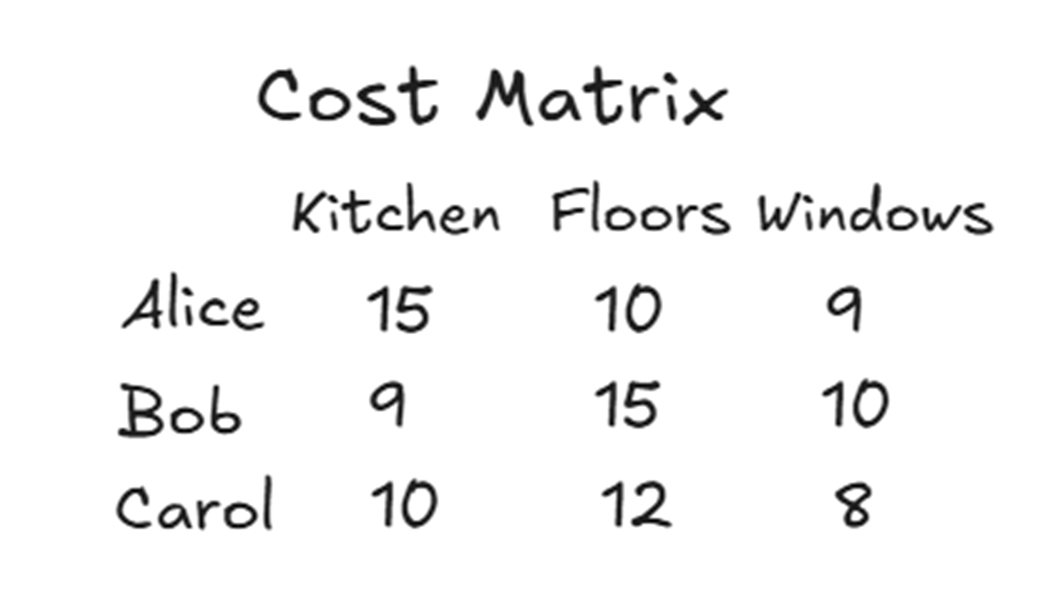
A cost matrix places workers in rows and tasks in columns, with each cell showing the cost of that pairing. section 3.1