What can you make from a circle besides a face or a globe? Divergent thinking generates many varied responses from a tight starting point. Rather than escaping constraints, it improvises within them: the constraint supplies a small playground, and originality appears in the unexpected directions explored. section 4.6.1
A circle as a prompt
A Torrance-style prompt asks for drawings built from a basic shape. Familiar answers such as a smiley are common; turning circles into a coconut tree is a less average response. The exercise can consider both the number of distinct ideas and how far they depart from typical ones. section 4.6.1
Figure 4.10 A TTCT test in action. I hope I did well! You can assess multiple factors here: how many unique drawings can you come up with, and how many of these deviate from the average drawing?
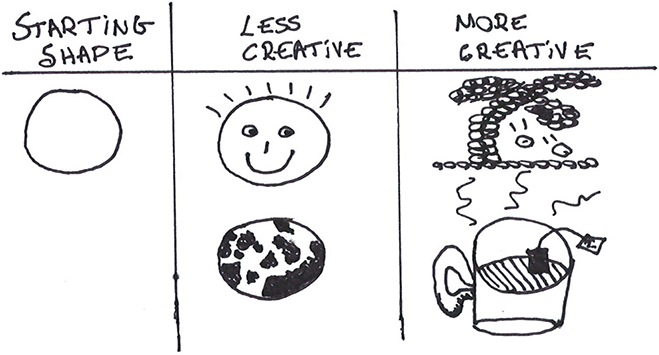
Use the figure as a quick ideation prompt: list or sketch several uses for the shape, then look for responses that differ from the obvious first answers. section 4.6.1
For programming, divergent thinking is useful when a project feels boxed in. Before declaring an idea impossible, investigate the constraint and generate alternatives. Adjusting constraints can help restore inspiration, but excess constraint can block creative potential. Treat the habit as one contribution to creativity, not creativity itself. section 4.6 section 4.7
Be cautious with tests and interview exercises. They make improvisation visible and measurable, yet divergent-thinking scores capture only a narrow slice of creativity; they do not establish a complete, systems-level account of creative work. section 4.6.1 section 1.4.2
A clear head may matter when generating possibilities. Evidence discussed around stimulants distinguishes focused, convergent work from ideation: psychostimulants may boost convergent thinking while diminishing divergent thinking. section 7.4.3
