An ecosystem map is a visual inventory of the companies and relationships surrounding a business: competitors, partners, vendors, customers, service providers, markets, and potential acquirers. It turns a crowded market into a picture people can inspect, rearrange, and connect to everyday decisions. section 16.4.2 section 31.0
Build the map as a working planning tool:
- List competitors, partners, suppliers, major customers, service providers, and other relevant company types. section 31.0
- Separate alliance partners, who promote the product, from channel partners, who resell it and take a percentage of sales. section 16.4.2
- Mark primary and secondary target markets so priority and preference remain visible. section 16.4.2
- Start with a whiteboard, mind map, or sticky notes, then codify the moving parts into a durable chart. section 16.4.2
- Update the map as customers, partners, market knowledge, and potential acquirers change. section 31.2.2
From wall map to acquisition signals
A company can place its partners, competitors, suppliers, and markets on a prominent office wall. As relationships develop, possible acquirers may emerge from either the competitor or partner groups. The team can then add relevant business-development, CTO-office, and ventures contacts, using ZoomInfo or LinkedIn to research them. section 31.2.2
Figure 16.2 Roadmap diagram from Dover’s GTM
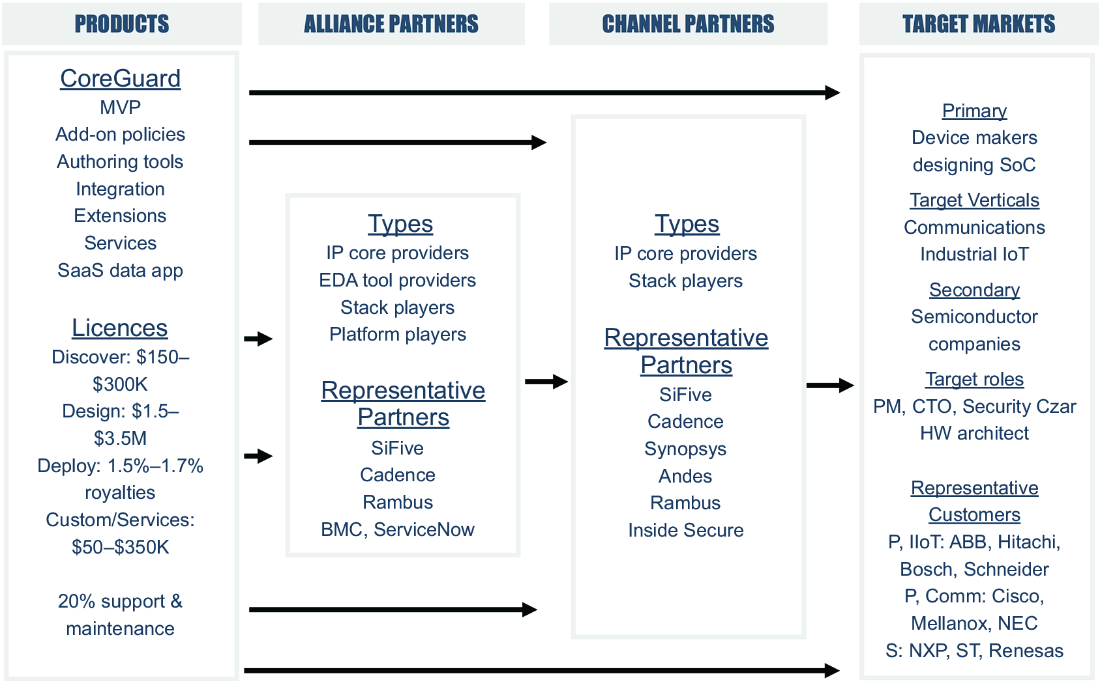
Use the roadmap diagram to see how product, sales routes, partners, dependencies, and target markets fit together from left to right. section 16.4.2
