Edge computing runs application logic at geographically distributed locations close to users instead of relying only on centralized data centers. It targets latency caused by distance, especially when one synchronous backend call adds hundreds of milliseconds to each request. section 5.3 section 5.3.2
Traditional CDN caching places copies of static files near users; edge computing extends that pattern by running application code at distributed edge locations. This distinction changes how interactive requests, not only downloads, reach users. section 5.3.2 section 5.3.2
Apply the architecture by separating delivery decisions:
- Cache static assets with content-based filenames indefinitely, because changed content receives a new filename. section 5.3.2
- Set dynamic-content lifetimes according to update frequency; cache HTML for minutes or hours when appropriate. section 5.3.2
- Treat personalized API responses cautiously, often caching them briefly or not at all. section 5.3.2
- Compare geographic distribution, team capability, operational capacity, simplicity, flexibility, and speed before moving computation outward. section 5.3
Retail rendering at the edge
A retailer serving primarily from United States data centers gave shoppers in Germany roughly 200ms of latency on every round trip. After tripling its points of presence and deploying the rendering engine in regions that previously cached only static files, it reduced Time to First Byte by about 50% for 20% of its traffic. section 5.3.2
Figure 5.7 CDN latency advantage
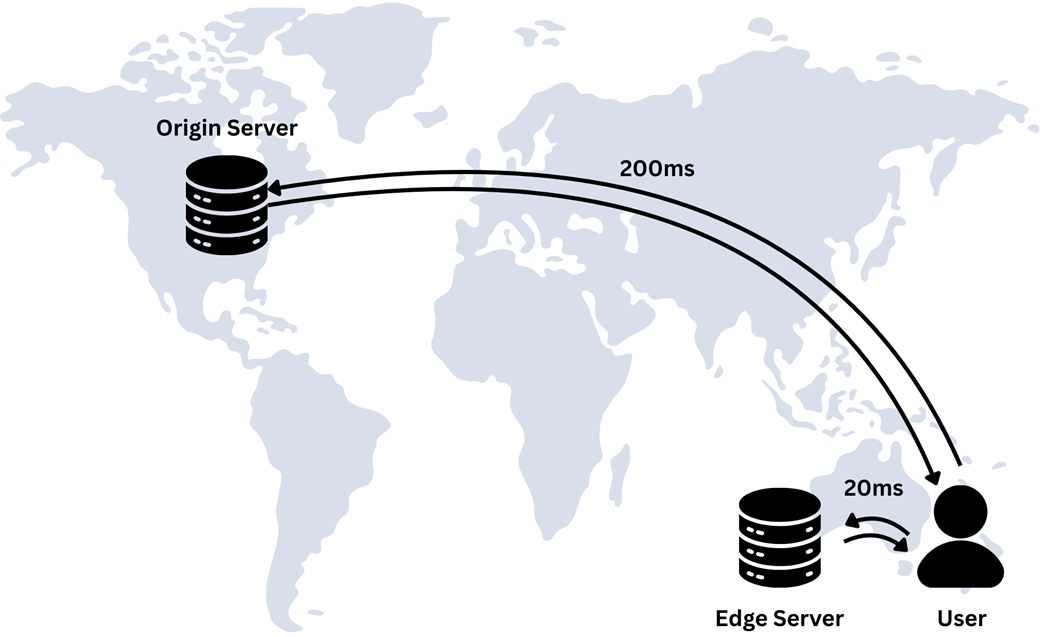
Use the latency comparison to distinguish nearby CDN delivery from longer trips to a centralized origin. section 5.3.2





