liveBook · Manning

Enabling team

As explained in Architecture Modernization: Socio-technical alignment of software, strategy, and structure

An enabling team is a Team Topologies team that helps stream-aligned teams acquire capabilities and overcome obstacles without permanently taking ownership of their work.

An enabling team helps other teams become more effective and autonomous without owning their product or infrastructure. It builds capability through education, empowerment, workshops, and hands-on support rather than doing the work permanently. section 11.2.1

Enabling teams typically:

  • Develop organizational skills such as continuous delivery, EventStorming, workshop facilitation, or chaos engineering. section 11.2.1
  • Teach concepts, facilitate workshops, and work alongside teams while they apply new ideas. section 11.2.1
  • Use expiry conditions so the team can disband or move to new challenges after achieving its purpose. section 11.2.1

Architecture modernization enabling team

An architecture modernization enabling team can maintain momentum and help a modernization project stay on track. Its purpose is to transfer capability and remove obstacles, not to become the permanent owner of modernization work. section 11.2.1
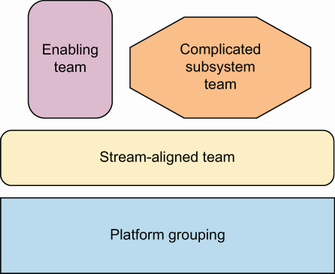
Figure 11.3 The four team types of Team Topologies

Use the four-team model to distinguish enabling teams from stream-aligned, platform, and complicated subsystem teams. section 11.2.1


How Architecture Modernization: Socio-technical alignment of software, strategy, and structure covers it

How deep it goes
Defines responsibilities, support techniques, skill examples, project use, and expiry conditions, but does not specify detailed operating procedures.
Examples
Uses continuous delivery, EventStorming, workshop facilitation, chaos engineering, and architecture modernization as examples.
What you can do after
Apply facilitating, teaching, and hands-on support while designing an exit condition for the enabling team.
How it connects
Connects enabling teams with stream-aligned teams, platform groupings, complicated subsystem teams, and facilitating interaction.

Also explained in

Compare how 2 books explain enabling team →

Related concepts

This explainer was generated by Manning's knowledge graph from the text of Architecture Modernization: Socio-technical alignment of software, strategy, and structure. The section links point to the parts of the book it draws on.