ETL—extract, transform, load—is a data-integration process for moving data from sources into a target system after preparing it. In KNIME, nodes make each operation visible: connect to a database, transform formats, join tables, and continue the workflow on a visual canvas. section 7.1
A typical ETL workflow proceeds through three stages:
- Extract data from one or more sources, such as a database. section 7.1
- Transform the data by changing formats, joining tables, or applying analysis. section 7.1
- Load the prepared result into a target system as part of an orchestrated, repeatable pipeline. section 7.1
ETL with KNIME
Build a workflow by connecting and configuring KNIME nodes on a canvas. Unlike a spreadsheet, the workflow can connect multiple sources, orchestrate transformations, and automate recurring work at scale. section 7.1
Figure 7.5 Anatomy of a KNIME node
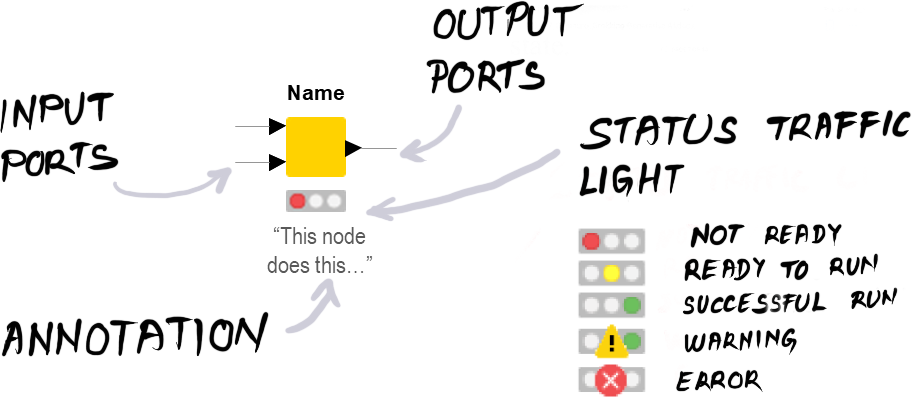
Use the node anatomy to see how individual ETL operations become configurable building blocks in a workflow. section 7.1





