ETL is a data pipeline pattern that extracts data from operational systems or files, formats, cleans, and transforms it according to business requirements, then loads the results into target tables in Snowflake. section 11.1.2
ETL is particularly useful when:
- The target data warehouse uses a different model from the source system and requires substantial transformation. section 11.1.2
- Complex transformations should be completed before loading, reducing transformation work for downstream consumers. section 11.1.2
- Teams can accept the operational costs of transformation during extraction: processing may be time-consuming, resource-intensive, and difficult to maintain when embedded in extraction tools or custom applications. section 11.1.2
Bakery pipeline
A bakery pipeline can extract partner and baked-goods data from operational tables, clean and reshape it according to business requirements, and load the transformed results into Snowflake target tables. Outputs can be organized across extraction, staging, data warehouse, and presentation layers. section 11.0 section 11.3
Figure 11.1 ETL pattern where data is first extracted from the source systems, then transformed according to business requirements, and finally loaded into Snowflake
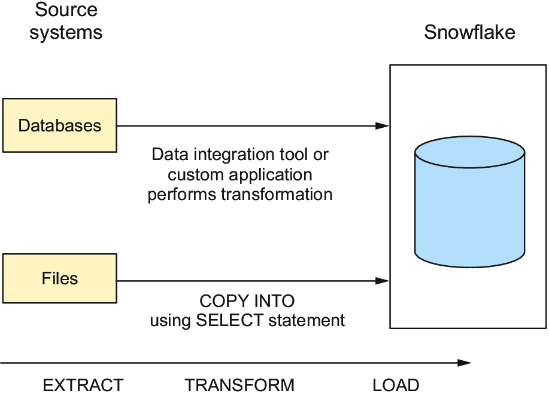
Visualizes the ETL sequence: extract from source systems, transform according to business requirements, and load into Snowflake. section 11.1.2





