An architectural scenario describes dynamic behavior by showing how elements in architectural views interact. It connects static structure to system behavior and requirements. section 3.2 section 3.2.5
Scenarios serve different purposes across architectural views:
- For domain, component, and deployment views, trace the sequence of interactions that implements a system operation or user story. section 3.2.5
- For the build view, describe how changes flow from a developer’s laptop to production. section 3.2.5
- Identify architecturally significant scenarios when they capture an application’s essence or impose technical requirements that shape its architecture. section 3.2.5
Food to Go
Ordering, preparation, and delivery scenarios are architecturally significant because they capture the essence of the application. section 3.2.5
Figure 3.12 A sequence diagram for the createOrder() operation that shows how the API Gateway, Order Service, Consumer Service, and Kitchen Service collaborate to implement the operation
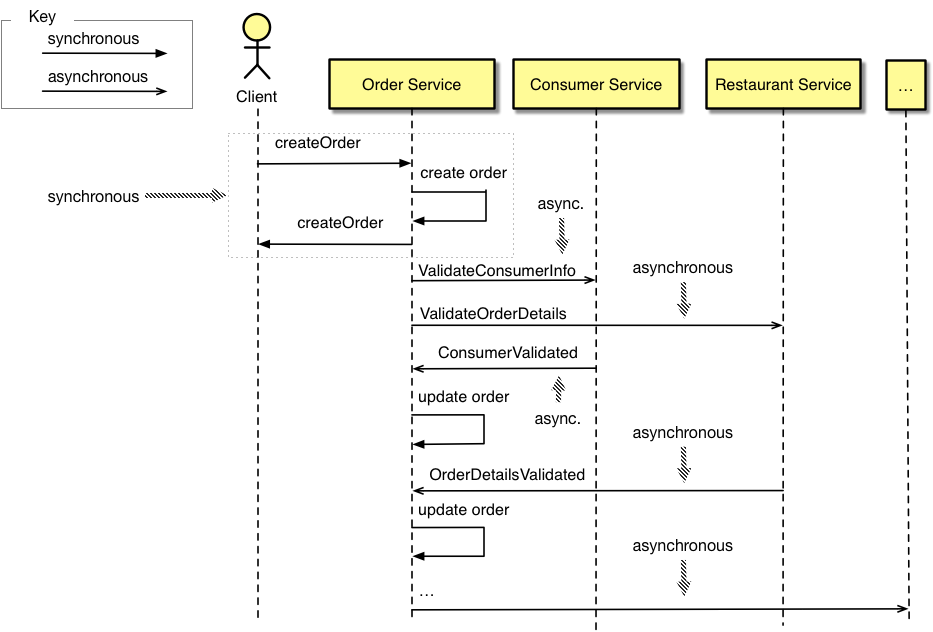
A sequence diagram traces how the API Gateway, Order Service, Consumer Service, and Kitchen Service collaborate to create an order. section 3.2.5