liveBook · Manning

Validity

As explained in Data Without Labels

Validity is the degree to which data conforms to the properties, characteristics, scope, and variations required by its use case.

Validity measures whether data conforms to the properties, characteristics, scope, and variations required by its use case. It asks whether captured observations and measurements are reliable for the analysis being performed. section 1.2.3

Scope check

If a study covers 2015–2019, including 2014 data is invalid because the observation falls outside the defined scope. section 1.2.3

Assess validity alongside other data-quality attributes:

  • Check that observations match the use case's required properties, characteristics, and variations. section 1.2.3
  • Separate validity from completeness, which concerns missing values, and accuracy, which concerns correctness. section 1.2.3
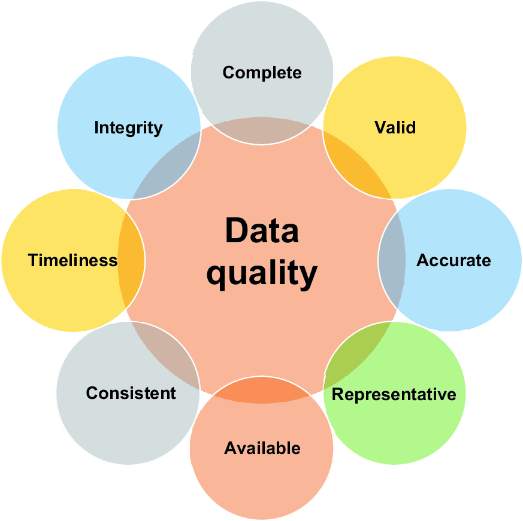
Figure 1.5 Data quality is of paramount importance; attributes of good-quality data are shown.
figure

Use the data-quality overview to compare validity with completeness, accuracy, representativeness, and availability. section 1.2.3


How Data Without Labels covers it

How deep it goes
Defines conformance and gives a scope-based example, but stops short of procedural validation checks or implementation details.
Examples
Uses a 2015–2019 study that incorrectly includes 2014 data to demonstrate invalid scope.
What it assumes
Assumes a defined use case, scope, properties, characteristics, and variations against which data can be compared.
What you can do after
Evaluate whether observations and measurements conform to a use case's defined scope and required characteristics.
How it connects
Connects validity with data quality, completeness, accuracy, representativeness, availability, observations, and measurements.

Also explained in

Compare how 2 books explain validity →

Related concepts

This explainer was generated by Manning's knowledge graph from the text of Data Without Labels. The section links point to the parts of the book it draws on.