Experiment tracking keeps experiments, results, reports, and supporting artifacts organized enough to compare work and investigate failures. Without it, a successful model can be mistaken for an unsuccessful one after results are overwritten. section 12.3
A solo researcher may use a notebook or text file, but teams need a structured, centralized way to record, compare, and reproduce experiments. section 10.1.1
Practical tracking responsibilities include:
- Preserve validation and test metrics, error analyses, visualizations, and other reports before considering a training run successful. section 10.1.1
- Record parameters and pipeline versions so repeated runs can produce the same result and support meaningful comparison. section 10.2
- Choose a centralized repository for collaborative work, while keeping simpler notes for genuinely independent experiments. section 10.1.1
- Separate platform responsibilities when useful: combine a training pipeline with a custom tracking tool if cost, infrastructure, or requirements justify integration. section 10.2
The overwritten best result
An engineer at a small company achieved strong model results, then accidentally overwrote the best run with unsuccessful experiments. A board report exposed the discrepancy, and investigation found that weak reporting and experiment management caused it. section 12.3
Figure 10.1 A DAG scheme representing a training pipeline
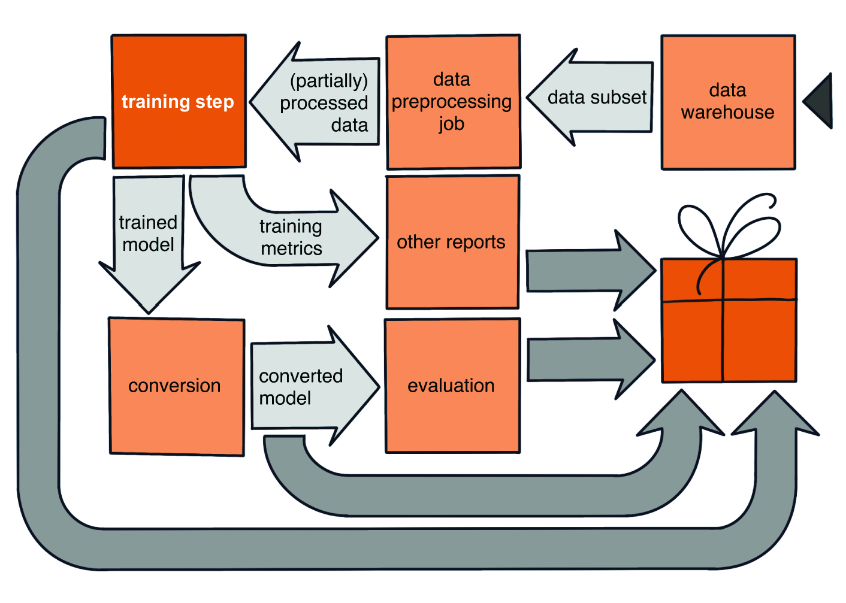
A DAG view helps place experiment tracking within the training pipeline, where ordered steps produce and preserve artifacts. section 10.1.1




