Extensibility is the ability to add capabilities without letting the effort of changing existing code grow unpredictably. A data-oriented approach organizes features around the data they need and the transformations they perform; integration and testing still take effort as a game grows. section 1.4 section 1.1
When adding a gameplay feature:
- Identify the required data, the logic that transforms it, and how that data flows through the game. section 1.1
- Avoid assuming every new behavior must fit an expanding network of enemy types or behavior objects. Object-oriented reuse can still help when relationships are predictable. section 1.4
Combining tile behaviors
A tile might merge, refuse to merge, duplicate another tile, explode, or teleport—and may combine several behaviors. Inheritance can struggle with these combinations; composition can create more behavior objects and relationships to coordinate. Expressing a feature through its data and transformations offers another way to extend the game. section 1.4
Figure 1.29 In a data-oriented architecture, the core effort required to add comparable features can remain relatively consistent because each feature is expressed through explicit data and transformations. Project-wide integration and testing can still add cost as the game grows. This is a conceptual illustration, not measured data.
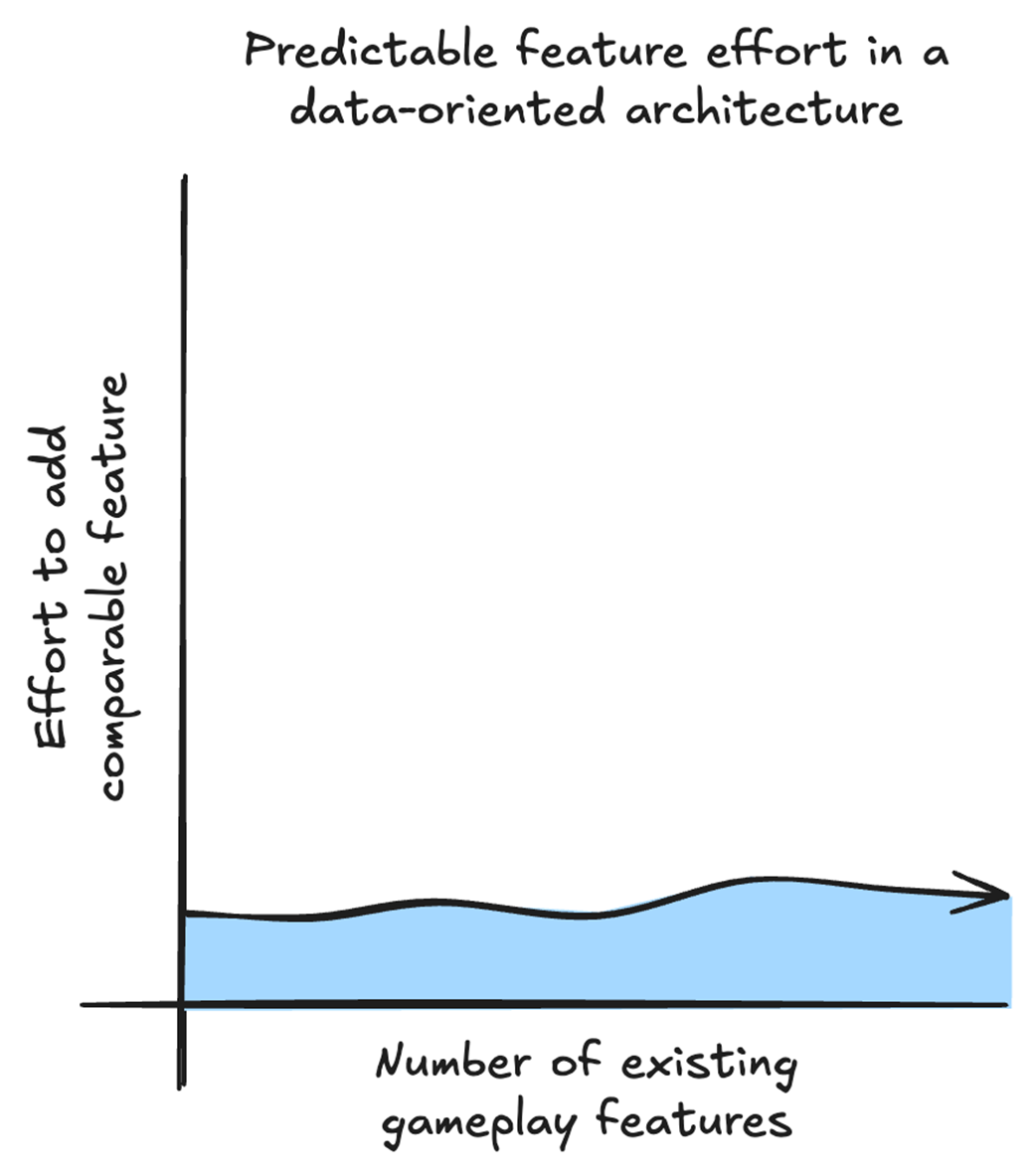
This conceptual figure contrasts feature effort in a data-oriented architecture: core effort can stay relatively consistent, while integration and testing may still add cost. section 1.4







