Resilience is a system’s ability to continue operating correctly or recover after component failures without unacceptable data loss, duplication, inconsistency, or corruption. In data platforms, it spans storage replication, ingestion guarantees, retries, resumability, and transactional commits. section 5.2.1 section 6.1.2
Evaluate resilience through several linked mechanisms:
- Replication stores copies of data across servers or disks, improving redundancy and supporting continued access after component failures. section 5.2.1
- At-least-once delivery permits reprocessing after failure, so downstream handling must address possible duplicates. section 6.1.2
- Exactly-once processing depends on replayable sources and coordinated state, offsets, checkpoints, and commits. section 6.1.2
- Atomic snapshot commits ensure that failed jobs expose neither partial writes nor incomplete table states. section 6.1.2
- Resumable pipelines track offsets so failures retry only records that were not committed successfully. section 6.1.2
Figure 6.3 By using checkpointing to track which incoming records have been committed successfully, the system knows which records to retry when a failure occurs.
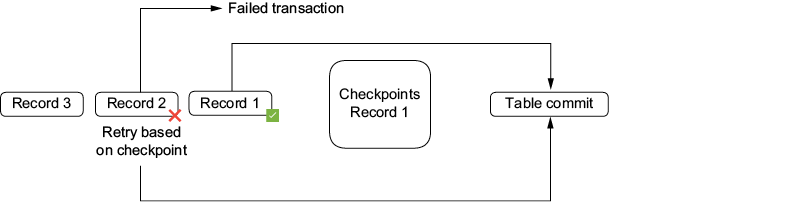
Checkpointing shows how an ingestion system identifies committed records and determines which records to retry after failure. section 6.1.2












