A formal model represents an application with explicit symbols and rules, making a chosen perspective clear enough to inspect and use for risk-focused testing. section 5.3.2
Different models expose different risks. Data flow diagrams emphasize how data is handled; structural UML diagrams expose architecture; behavioral diagrams capture user flows. section 5.3.2
Useful formal-modeling choices include:
- Data flow diagrams for tracing how information moves through the application. section 5.3.2
- UML component diagrams for decomposing architecture and targeting risks in specific system parts. section 5.3.2
- Sequence and use case diagrams for representing user behavior and generating user-focused risk prompts. section 5.3.2
Booking list functionality
A component model can represent a BookingRequest class calling an Auth API to verify that BookingService may complete a request. That model can become a prompt asking an LLM to generate risks for the represented behavior. section 5.3.2
Figure 5.6 A component diagram of the booking list functionality
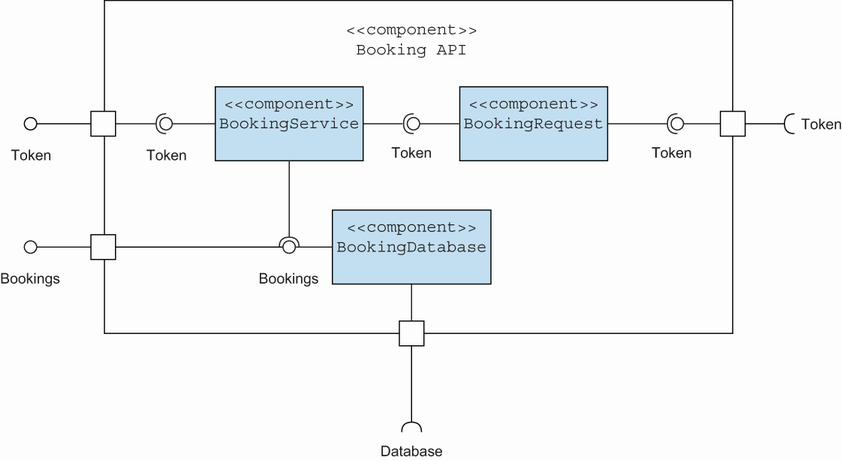
Use the component diagram to inspect architectural boundaries and dependencies in the booking list functionality. section 5.3.2
Figure 5.7 A user flow diagram of the booking list functionality
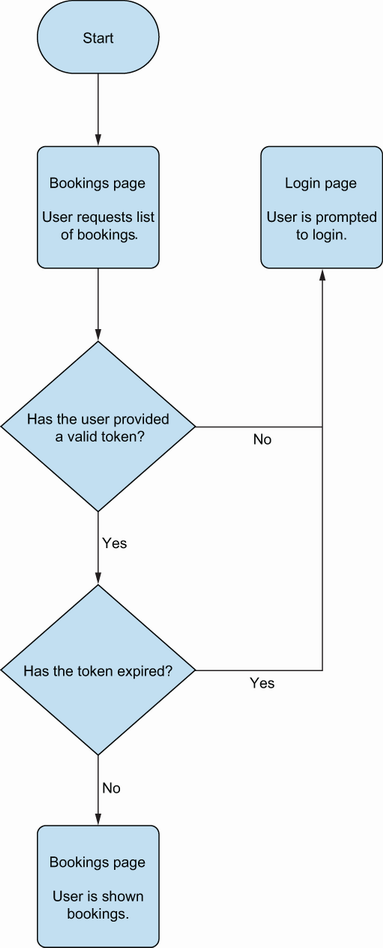
Use the user-flow diagram to inspect behavioral paths and formulate user-focused risk prompts. section 5.3.2
