A founder establishes a company or startup. In early-stage investing, the founder may be as important as the product because limited operating history makes conventional evaluation difficult. section 12.3
Founder assessment combines human judgment with structured evidence. A determined, charismatic founder can influence an investment decision, but professional history, prior ventures, education, collaborators, and previous exits provide additional signals. section 12.3 section 12.3.3
A programmer can score founders and their surrounding team using:
- Experience in the business area targeted by the new startup. section 12.3.3
- Education, previous collaborators, and evidence of earlier founding or successful exits. section 12.3.3
- Missing skills within the founding team and the track record of its advisors. section 12.3.3
- Signals from professional and startup-data platforms, potentially incorporated as weighted model parameters. section 12.3.3
From impression to score
An investor may begin with the impression that an energized founder is compelling, then build a scorecard from domain experience, prior exits, education, collaborators, team skills, and advisor quality. The result supports an educated decision rather than guaranteeing success. section 12.3 section 12.3.3
Figure 12.2 A lead investor’s job is to represent all investors when forming an SVP that will be registered on a start-up’s cap table.
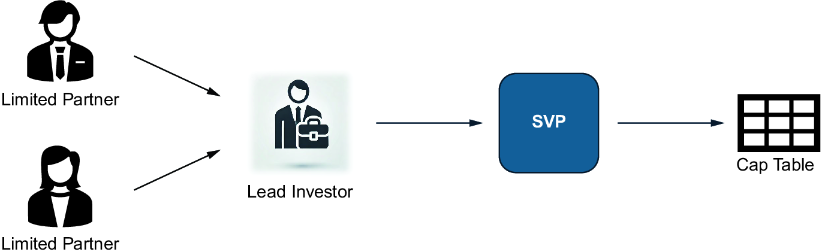
A lead investor can represent multiple investors through an SPV when investing in a startup, placing the SPV on the startup’s cap table. section 12.2.2

