liveBook · Manning

Free-form text

As explained in Effective Data Analysis

A free-text response is an unrestricted textual answer supplied in the respondent's own words.

Free-form text is an open-ended response supplied in the respondent’s own words. It can reveal valuable qualitative data, but usually requires more effort to analyze than fixed-choice responses. section 6.2.2

Use free-form text with attention to response design:

  • Treat the textbox size as part of the measure: its dimensions can influence how much respondents write. section 6.2.2
  • Choose it for open-ended questions when respondents’ own wording is more useful than predefined categories. section 6.2.2
  • Compare it with single-response, multiple-response, ranking, and other response formats before deploying a self-report measure. section 6.2.2
Figure 6.6 Varying methods of presenting the same response format
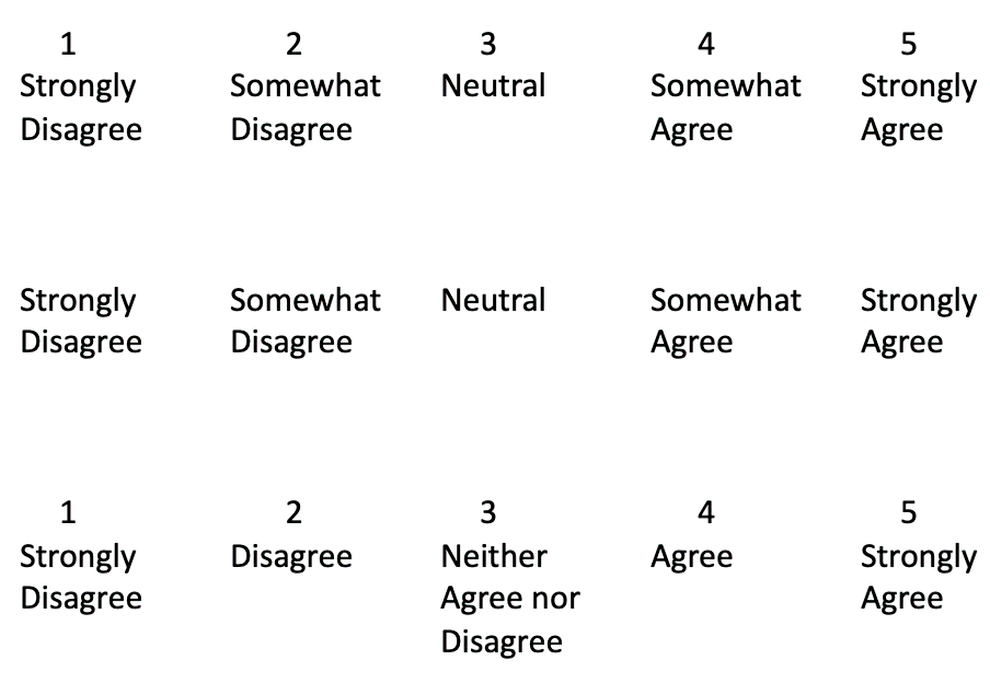
figure

Compare different presentations of response formats when designing a survey question. section 6.2.2

How Effective Data Analysis covers it

How deep it goes
Defines the format and notes qualitative value, analysis difficulty, and textbox-length effects, but provides no analysis procedure.
Examples
Uses free-text boxes in survey tools such as Google Forms and contrasts them with fixed-choice response formats.
What it assumes
Assumes familiarity with self-report questions and response formats; distinguishes free text from single-, multiple-, and ranking-response designs.
What you can do after
Evaluate whether free-text boxes fit an open-ended question and anticipate qualitative analysis and response-length challenges.
How it connects
Connects free-form text with self-report measures, open-ended questions, qualitative data, and response scales.

Related concepts

This explainer was generated by Manning's knowledge graph from the text of Effective Data Analysis. The section links point to the parts of the book it draws on.