Functional fixedness is a cognitive bias that limits creativity by keeping people attached to familiar uses, forms, or mental images. A familiar picture of a cinema—rows of red chairs, a screen, and no windows—can narrow the solutions a group considers. section 7.1.2
Collaborative modeling can expose the bias when different groups produce similar solutions. Facilitators should make alternatives easier to explore without deciding for the group whether a bias is present. section 7.1.2 section 7.3.2
Use these prompts and structures to loosen familiar assumptions:
- With complex or complicated Example Mapping scenarios, design a small amount of structure beforehand so the group can focus on the rules rather than spending the session visualizing them. section 7.3.2
- When creativity matters more than speed, remove templates initially; when the group needs help starting, provide a simple adaptable example. section 7.3.2
- Model the undesirable version first, or change a frequently used word, and inspect what these disruptions reveal about the current model. section 7.5
- After meetings or modeling sessions, ask which biases shaped the outcome and discuss observations with others to slow automatic judgment. section 7.1.2
Reopening a cinema
A team asked to maintain 1.5-meter distance between reservations initially proposed two empty seats, an empty row, or diagonal spacing because the seating template shaped their thinking. Removing or reframing that template could open other solutions. section 7.3.2
Figure 7.1 Sensemaking exercise to demonstrate cognitive bias during collaborative modeling
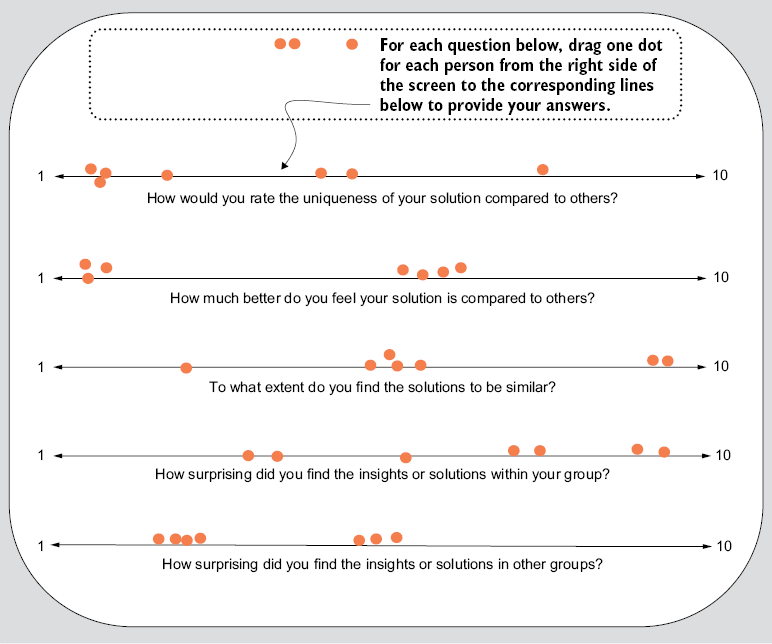
Use the sensemaking exercise to compare group outputs and identify where familiar examples or assumptions have constrained the model. section 7.1.2
