Governance provides structured oversight for operating and maintaining Kafka-based data systems. In an e-commerce platform, it helps keep product data consistent, protect payment information, and prevent one client from overwhelming the cluster. section 13.0
Effective governance coordinates several operational concerns:
- Schema management preserves data integrity and compatibility as producers and consumers exchange evolving records. section 13.0
- Authentication, authorization, encryption, and access control protect sensitive data and restrict who can access or modify it. section 13.0 section 18.1.4
- Resource management and quotas limit resource hogging and help preserve cluster performance for other users and applications. section 13.0 section 18.1.4
Schema evolution in an online store
If a producer adds a field without coordinated schema governance, an unprepared downstream consumer may fail. Inconsistent product records can then corrupt inventory information or produce incorrect pricing. Agreed schema contracts reduce these compatibility risks. section 13.0 section 18.1.4
A data-mesh arrangement distributes responsibility. Producing business units publish data products, manage their life cycle and quality, follow schema contracts, and grant access. Consuming units request access and comply with schema and data-protection rules. The platform team supplies infrastructure and repeatable processes so teams can work without requiring central intervention for every change. section 18.1.4
Figure 18.3 Kafka in a data mesh architecture
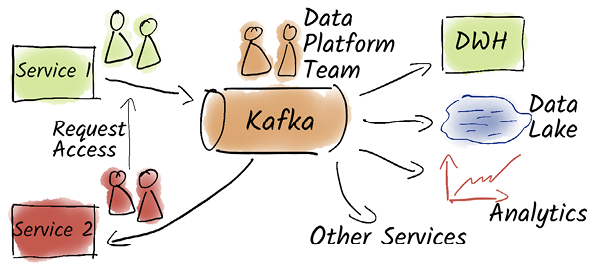
Use the architecture figure to relate Kafka’s data-product flows to schema enforcement, access control, quotas, compliance, and decentralized departmental responsibilities. section 18.1.4




