Governance assigns accountability, controls, review processes, and decision rights for managing a system and its effects throughout its lifecycle. It keeps responsibility explicit after delivery, even when team members change. section 9.7 section 10.2.1
Establish governance as an operational work item:
- Name the owner and the person who manages each system; obtain agreement from the accountable manager. section 10.2.1
- Define effective controls, user access to those controls, and a responsible authority for consequential judgments. section 9.7
- Review performance through effects on users and others, consult impacted people, and measure harm against utility. section 9.7 section 6.2
- Check support, documentation, tools, infrastructure changes, failure handling, end-of-life risks, and technical debt. section 10.2.1
- Record inadequate governance or harmful impacts in the risk register and address them through the project backlog. section 6.2
- Repeat reviews on an agreed schedule, beginning with an annual review when no organizational interval exists. section 10.2.1
Production handoff
During The Bike Shop deployment, support groups were prepared, a governance process was assigned, logging and monitoring were connected to the model server and data subsystem, and testing preceded release. section 9.10
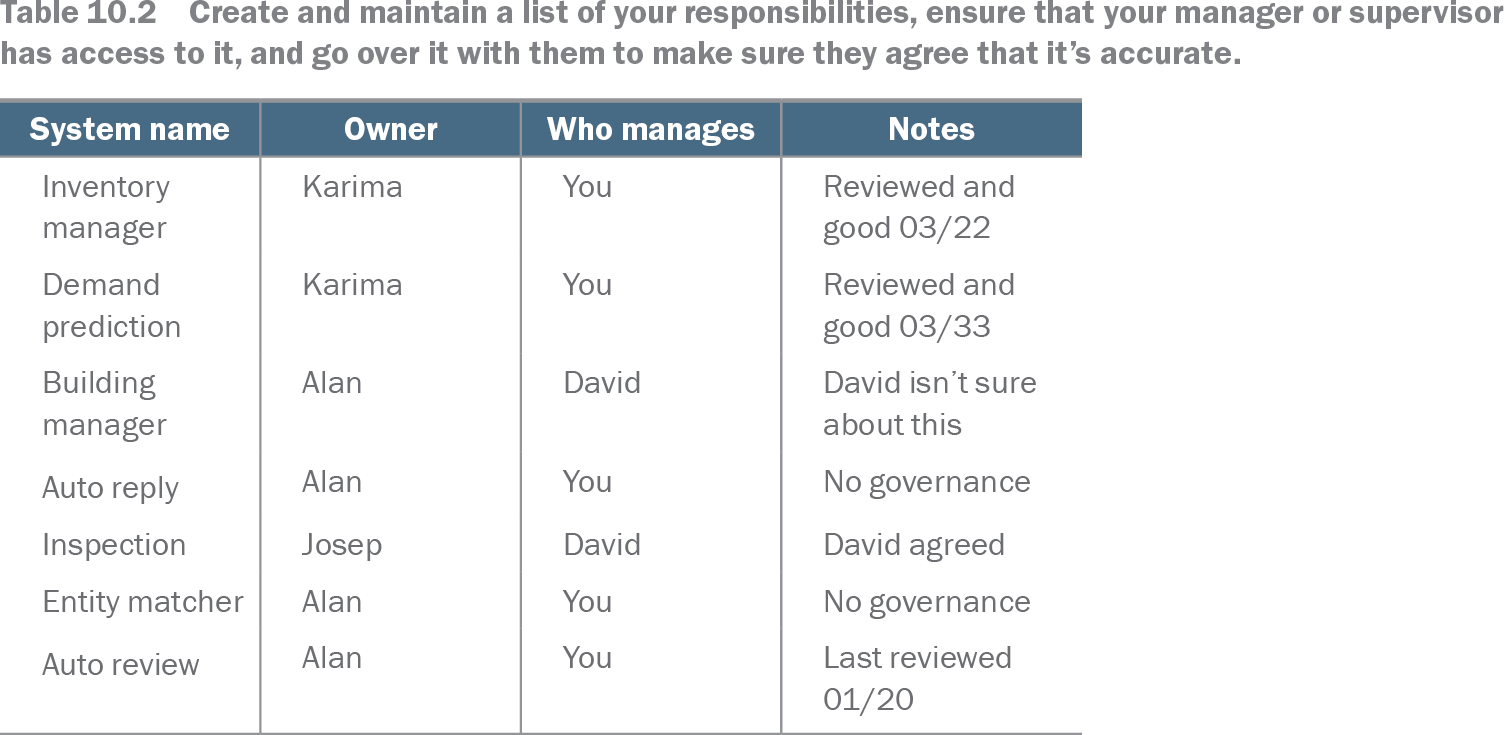
Table 10.2 Create and maintain a list of your responsibilities, ensure that your manager or supervisor has access to it, and go over it with them to make sure they agree that it’s accurate. (view table figure)
| System name |
Owner |
Who manages |
Notes |
|---|---|---|---|
| Inventory manager |
Karima |
You |
Reviewed and good 03/22 |
| Demand prediction |
Karima |
You |
Reviewed and good 03/33 |
| Building manager |
Alan |
David |
David isn’t sure about this |
| Auto reply |
Alan |
You |
No governance |
| Inspection |
Josep |
David |
David agreed |
| Entity matcher |
Alan |
You |
No governance |
| Auto review |
Alan |
You |
Last reviewed 01/20 |
Use the responsibility table to expose missing ownership, unresolved management assignments, review status, and systems with no governance. section 10.2.1