GPT-4o is an AI system used through plain-language prompts to help with website work. It can support a site builder without requiring programming, making it useful for tasks such as planning content, improving pages, and developing ideas for search visibility. section 1.7
For a live website review, give GPT-4o a site address and ask a focused question. Scanning the site directly lets it consider the larger experience—not only copied page text—including site-wide navigation and whether the design feels consistent. section 11.2.2
A practical website-review sequence is:
- Ask for suitable search keywords after providing the website URL. section 11.2.2
- Continue the same conversation by asking which pages need design improvement. section 11.2.2
- Use the page-specific feedback to identify cluttered layouts, oversized images, weak product presentation, empty pages, or typography and image choices that need attention. section 11.2.2
- If the system reports that a site is under construction, try another browser and clear cookies. section 11.2.2
Water-garden site audit
A prompt asking for keywords for a backyard water-garden website produced terms such as “pond maintenance,” “aquatic plants,” “koi pond design,” and “water lilies.” Follow-up prompts then flagged a cluttered home page, an overly dominant main image, basic shopping pages, and empty pages that should gain content or be removed. section 11.2.2
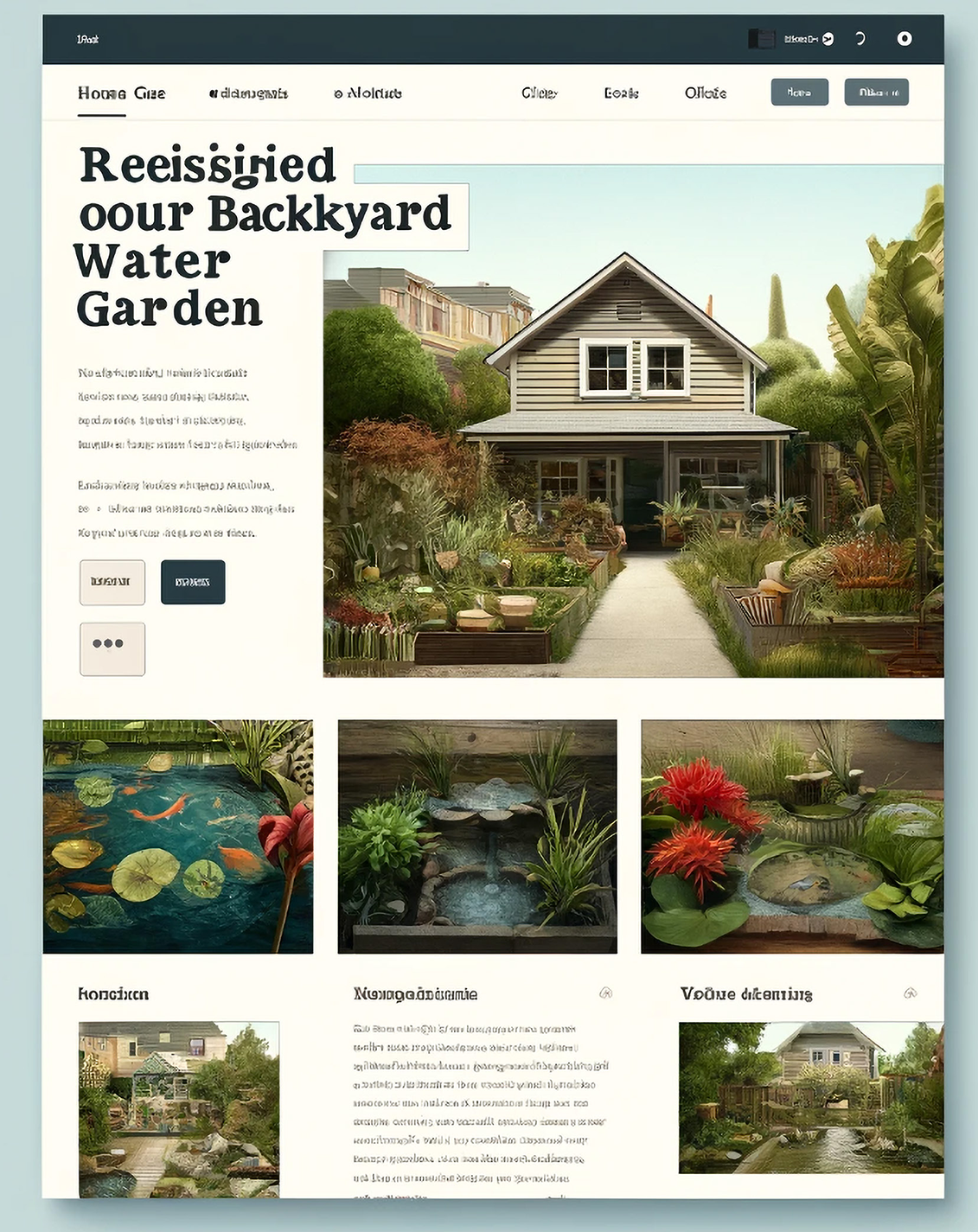
The redesign image illustrates a home page after GPT followed its own improvement suggestions, connecting a site review to a visible design change. section 11.2.2
GPT-4o can also be selected alongside other AI systems. Aggregators such as Not Diamond and Chathub let a person compare systems or route prompts by capability; GPT is described as strong for language understanding, language generation, and reasoning, while Perplexity is used for current-data research and Claude for programming. section 1.4.1



