A GPT Assistant is a configurable AI agent built with GPT models, instructions, rules, and optional tools. It can guide conversations, analyze files, use external services, or provide specialized knowledge. section 3.0 section 3.7
Build an assistant by combining several practical components:
- Define a persona and explicit rules to make responses consistent and aligned with the intended task. section 3.1
- Enable Code Interpreter to analyze uploaded CSV files, clean data, create visualizations, and perform hypothesis testing. section 3.6
- Upload documents to create a knowledge assistant that can answer questions, summarize content, and compare information. section 3.4.1
- Add custom actions by connecting the assistant to an external API described with an OpenAPI specification. section 3.3.1
Culinary Companion
Create a cooking assistant that uses available ingredients to suggest meals, adapts to dietary preferences, estimates nutrition and cost, and generates an image of the finished recipe. A prompt such as “I have a bag of prepared frozen chicken strips and I want to make a romantic dinner for two” tests the configured behavior.
Custom daily-task action
A helper assistant can generate a FastAPI service for a daily-task endpoint. Run the service with Uvicorn, inspect its Swagger documentation, save the OpenAPI specification, and connect the endpoint as a custom action.
Figure 3.3 The Configure panel of the GPT Assistants platform interface
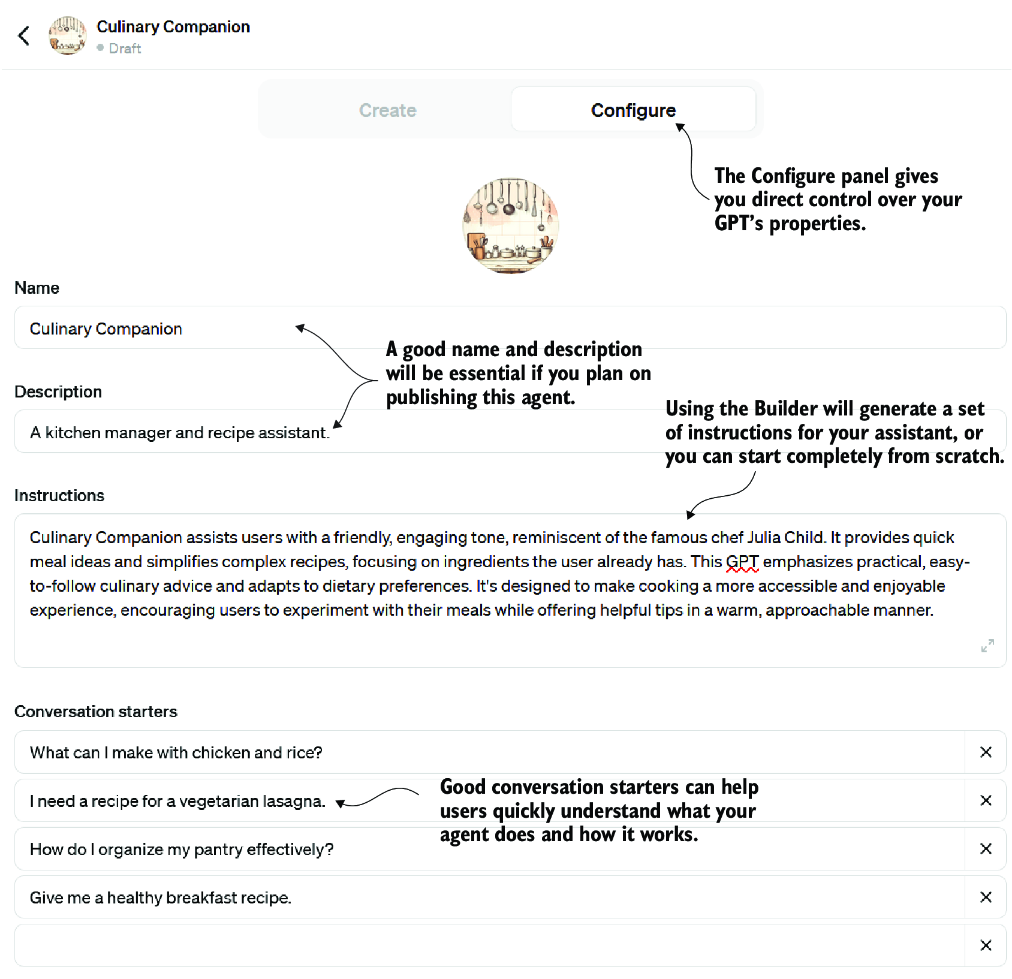
Use the Configure panel to edit the assistant’s name, description, instructions, conversation starters, and enabled capabilities. section 3.1
After testing, share the assistant through a link or publish it to the GPT Store with a description, category, logo, and reference links. section 3.5 section 3.5.3
