liveBook · Manning

Hybrid cloud

As explained in Fundamentals of Cybersecurity

A hybrid cloud combines two or more distinct cloud deployment approaches and supports movement of data and applications between them.

A hybrid cloud combines two or more deployment models—public, private, or community—into a unified platform, allowing data and applications to move between environments. Organizations may also describe a hybrid environment as keeping some systems on-premises and hosting others in the cloud. section 13.6 section 13.1

A hybrid approach can balance:

  • Public-cloud scalability and flexibility with the control of private or community environments. section 13.6
  • Different operational choices: organizations can manage environments internally or use specialized service providers. section 13.6.4

Sensitive data and peak demand

An organization might keep sensitive data in a private cloud at its on-premises data center, while using a public cloud to handle traffic increases during peak periods. section 13.6.4

Figure 13.5 Comparison the distinct cloud deployment models
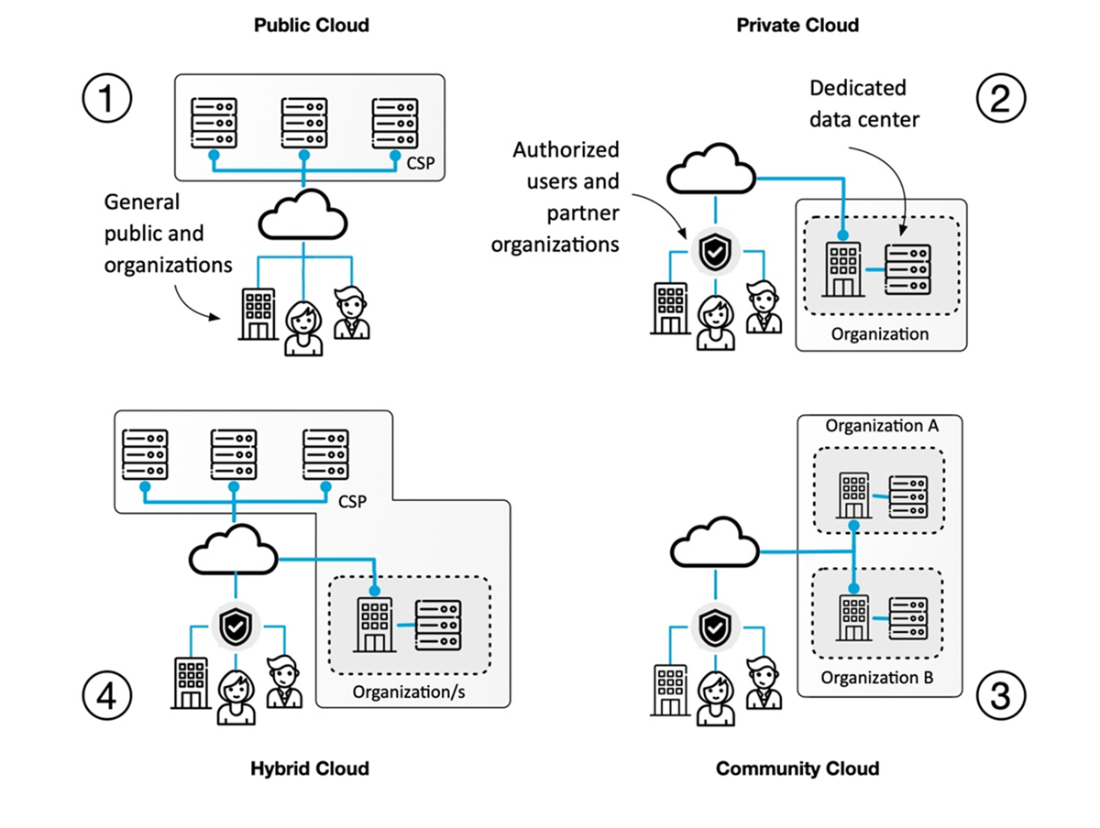
Compare public, private, community, and hybrid deployment models. section 13.6


How Fundamentals of Cybersecurity covers it

How deep it goes
Defines a unified combination and gives a workload example, but does not detail technical integration.
Examples
Uses private cloud for sensitive data and public cloud for peak traffic or less-sensitive workloads.
What you can do after
Evaluate deployment choices by balancing workload needs for scalability, control, and security.
How it connects
Connects public cloud, private cloud, community cloud, data centers, and cloud deployment models.

Also explained in

Compare how 9 books explain hybrid cloud →

Related concepts

This explainer was generated by Manning's knowledge graph from the text of Fundamentals of Cybersecurity. The section links point to the parts of the book it draws on.






