A hyperparameter is a configuration value chosen outside model-parameter learning. It controls training or model behavior, such as how strongly a loss function emphasizes competing objectives. section 5.3.2 section 9.1.4
Use hyperparameters to make explicit tradeoffs and compare model configurations:
- Set alpha, beta, and gamma to balance classification quality, confidence on difficult examples, and result diversity. section 5.3.2
- Sweep a model-complexity value across a grid, train each configuration to convergence, and compare final loss or metric values. section 9.1.4
Choosing model complexity
For gradient boosting, test tree depths from 2 through 16. Plot each depth against its final metric or loss to identify the useful complexity range and expose overfitting or underfitting concerns. section 9.1.4
Figure 9.7 Finding the optimal model complexity based on learning curves
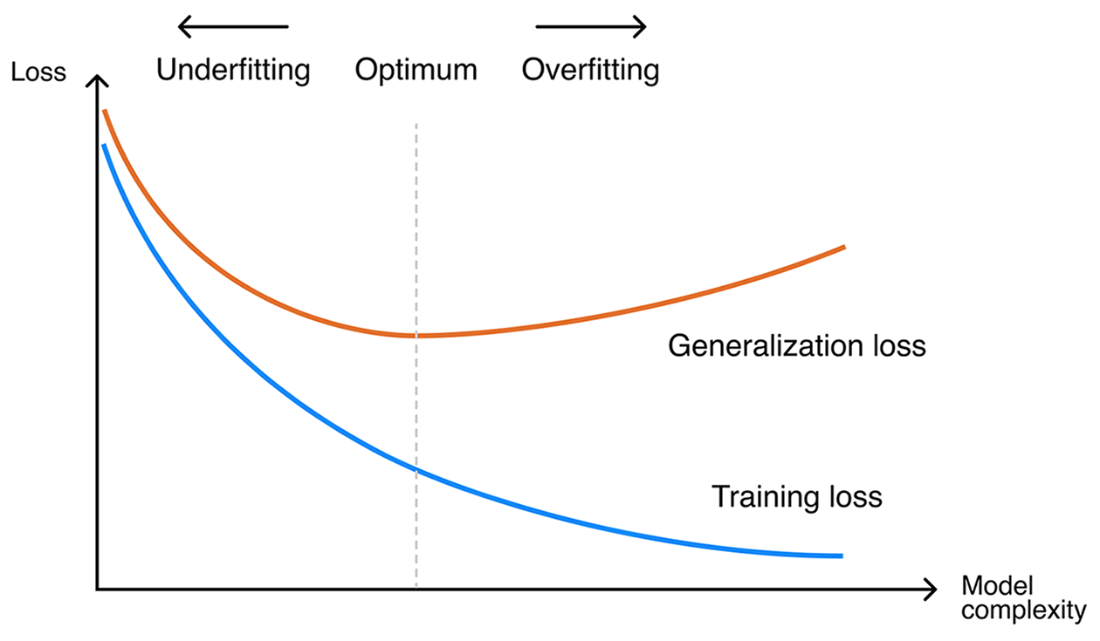
Use the learning-curve figure to relate candidate hyperparameter values to model complexity and select an effective range. section 9.1.4


















