The iceberg model represents mental activity in three levels: conscious processes are visible and rationally accessible; preconscious memories become accessible through association; unconscious processes remain inaccessible but influence judgments, feelings, and behavior. section 4.3.1
Use the levels to notice what may be happening beneath visible group behavior:
- Conscious: observable sensations and thoughts, such as noticing hunger and deciding to eat. section 4.3.1
- Preconscious: stored memories and knowledge retrieved by association, such as a song recalling a holiday or a design recalling earlier practices. section 4.3.1
- Unconscious: inaccessible processes that may shape behavior, including anxiety, conflict, frustration, and negative feelings. section 4.3.1
Making group shadows visible
During collaborative modeling, participants bring all three levels into the session. A facilitator can act like a flashlight, surfacing suppressed frustration or conflict before it grows into a larger problem. section 4.3.1
Figure 4.6 Iceberg model that describes three levels of the mind: conscious, preconscious, and unconscious
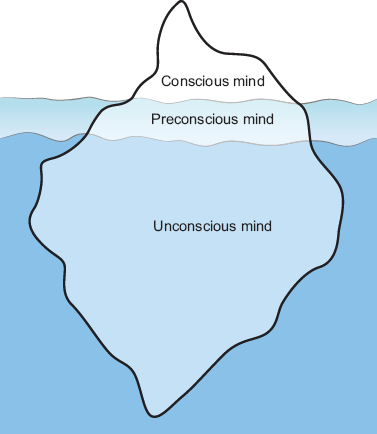
Inspect the iceberg visualization to compare the visibility and accessibility of conscious, preconscious, and unconscious activity. section 4.3.1
