The subconscious mind contains mental processes inaccessible to consciousness that still influence judgments, feelings, and behavior. In collaborative modeling, it can hold anxiety, conflict, frustration, and other group tensions that remain hidden until surfaced. section 4.3.1
Making group shadows visible
During a collaborative modeling session, unresolved conflict may grow beneath visible discussion. A facilitator can “turn on the flashlight” by surfacing these shadows, making them discussable and manageable rather than allowing them to become larger problems. section 4.3.1
Distinguish the three levels of mental processing:
- Conscious processes are observable and available for rational reflection. section 4.3.1
- Preconscious material becomes accessible through association, such as memories triggered by music or familiar designs. section 4.3.1
- Subconscious processes remain inaccessible directly but affect judgments, feelings, behavior, anxiety, and conflict. section 4.3.1
Figure 4.6 Iceberg model that describes three levels of the mind: conscious, preconscious, and unconscious
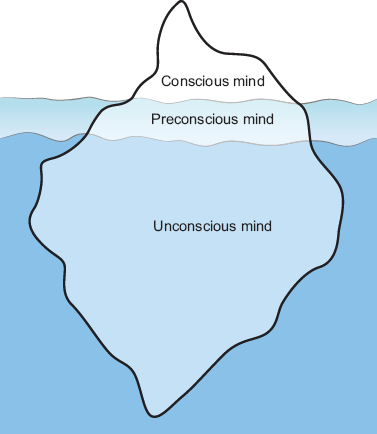
Use the iceberg model to visualize conscious, preconscious, and subconscious layers, including the larger hidden layer beneath observable behavior. section 4.3.1
