liveBook · Manning

Preconscious mind

As explained in Collaborative Software Design: How to facilitate domain modeling decisions

The level of mental content that is not immediately conscious but can be accessed through association or recollection.

The preconscious mind contains thoughts, knowledge, and memories that are not immediately conscious but can be accessed through association for a specific purpose. section 4.3.1

In collaborative modeling, associations can bring stored experience into conscious discussion, helping participants notice material that is present but not immediately accessible. section 4.3.1

Association in practice

Hearing a particular song may recall a first holiday with friends; seeing an architecture design may retrieve memories and practices from earlier projects. section 4.3.1

Figure 4.6 Iceberg model that describes three levels of the mind: conscious, preconscious, and unconscious
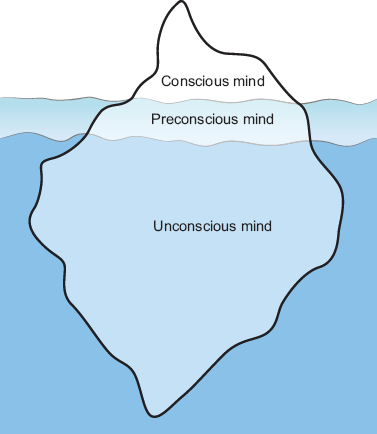
Use the iceberg model to compare conscious, preconscious, and unconscious mental content. section 4.3.1

How Collaborative Software Design: How to facilitate domain modeling decisions covers it

How deep it goes
Defines preconsciousness within a three-level iceberg model and illustrates associative access without detailing a facilitation procedure.
Examples
Uses songs recalling holidays and architecture designs retrieving earlier project memories as associative examples.
What you can do after
Evaluate how associations can retrieve stored memories and knowledge for a specific purpose.
How it connects
Connects preconsciousness with conscious mind, unconscious mind, association, memory, and collaborative modeling.

Related concepts

This explainer was generated by Manning's knowledge graph from the text of Collaborative Software Design: How to facilitate domain modeling decisions. The section links point to the parts of the book it draws on.