An identity provider (IdP) is a dedicated service that stores users’ credentials and helps applications verify that users are authenticated. When multiple applications rely on the same IdP, a user can sign in once and access other applications protected by it. This is single sign-on (SSO). section 8.1
A typical sign-in flow works like this:
- A user requests a protected page without being logged in. The application redirects the user to the IdP’s login page. section 8.1
- After the user authenticates, a redirect returns them to the requested page with a token containing their details and confirming authentication. section 8.1
- The token is stored temporarily, such as in a browser cookie. It lets the user access applications protected by the same IdP until it expires; continued activity can refresh it. section 8.1
Signing in across websites
Signing in to Chrome with a Google account can let a user reuse those credentials on websites offering Sign in with Google. section 8.1
The IdP handles shared SSO security, while authentication and authorization answer different questions: who a client is, and whether that client may access a resource. OIDC is commonly used for authentication, and OAuth can provide authorization alongside it. In an Aspire-hosted application, an internally hosted IdP can be reached through service discovery. section 8.1 section 8.6
Figure 8.1 SSO flow
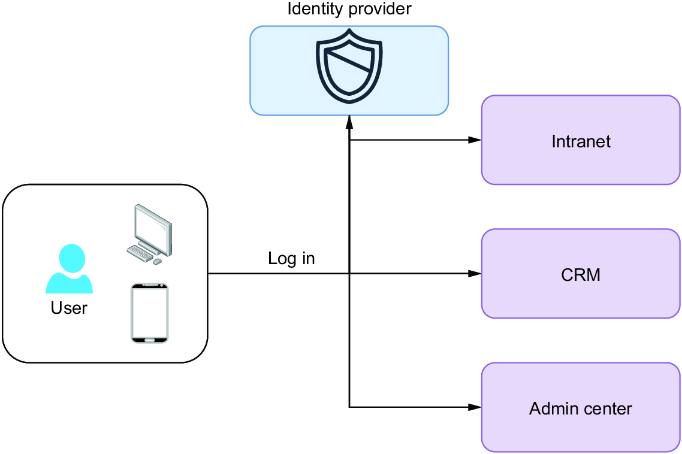
Follow the SSO flow from the protected resource to the IdP login and back to the application. section 8.1











