An inference engine is a program that runs an expert system’s reasoning loop. It repeatedly evaluates facts in working memory against if-then rules, generating new facts, modifying existing ones, or stopping the process. The loop ends when no rule can be triggered by the available facts. section 2.1
An inference engine supports a separated, maintainable rule-based architecture:
- It executes rules independently from domain knowledge stored in a knowledge base. section 2.1
- It uses working memory to receive inputs and track deductions. section 2.1
- It applies business rules to make decisions or automate actions within business processes. section 2.2
- It works alongside rule authoring, coherence checking, governance, and analytics so rules can be changed and evaluated without changing underlying code. section 2.1 section 2.2
Clinical and operational rule execution
MYCIN used more than 500 if-then rules to infer bacterial infections from organisms, infection sites, and clinical signs. A separate operational system could combine rising condenser and steam temperatures with rapidly rising condenser pressure and condensate level to identify an emergency pump state and display a breakdown message. section 2.1
Figure 2.1 Flowchart of an expert system
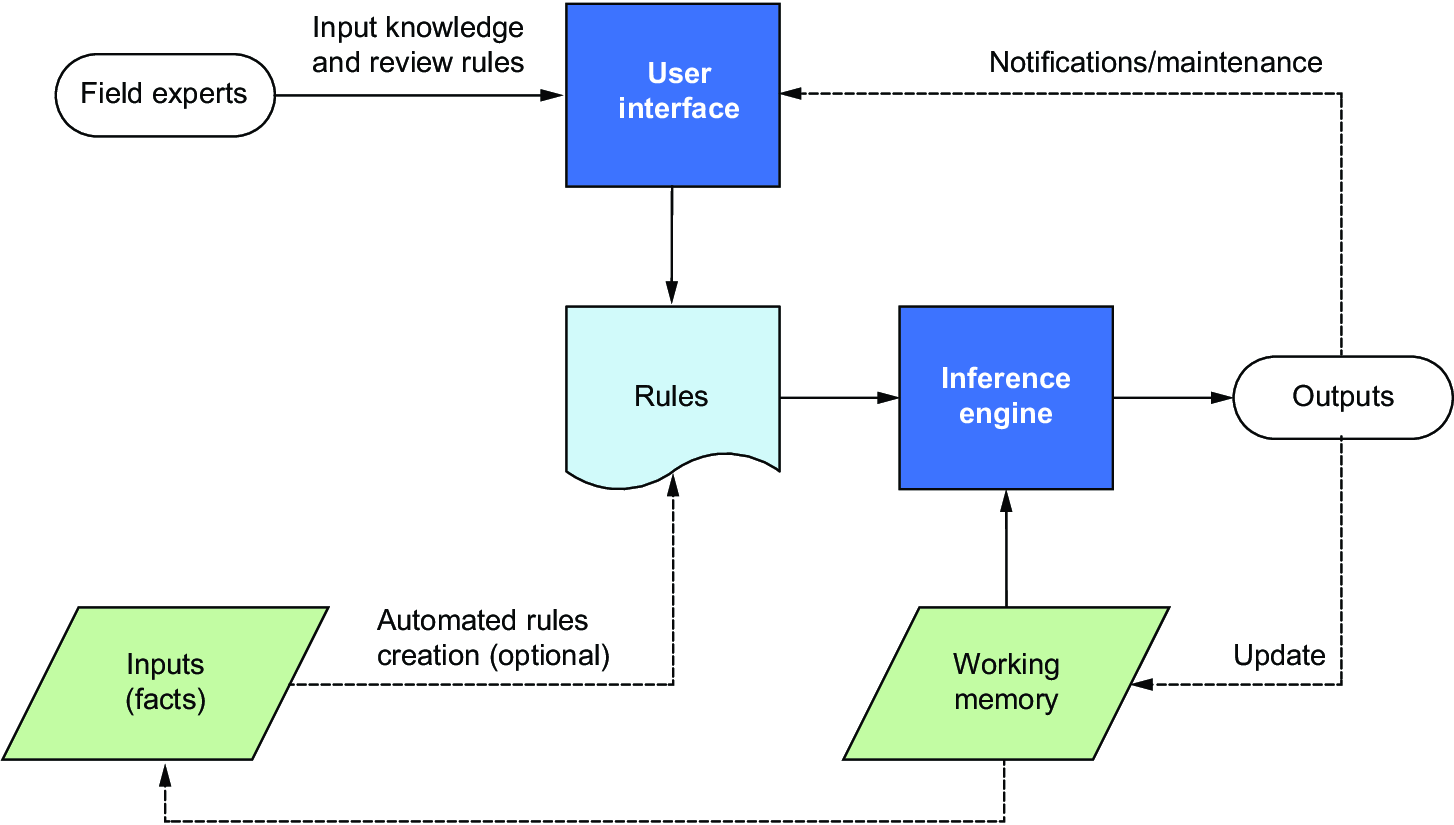
Use the flowchart to follow how the knowledge base, working memory, and inference engine interact. section 2.1


