Infrastructure as code defines Kafka infrastructure and configuration in machine-readable files, making desired state version-controlled, reproducible, and auditable. A GitOps workflow detects changes, compares desired and actual state, and applies the required updates. section 10.2.2
Common implementation paths include:
- Kubernetes operators such as Strimzi or Confluent for Kubernetes manage Kafka resources from updated configuration. section 10.2.2
- Ansible automates topic creation and configuration, while Puppet manages infrastructure consistency and Terraform defines Kafka resources declaratively. section 10.2.2
Governed configuration change
A consumer team proposes a Kafka configuration change through a pull request. Data owners review and approve or reject it before the GitOps pipeline synchronizes the cluster. section 10.2.2
Figure 10.1 Applying Kafka cluster modifications via GitOps: after the updated Kafka cluster configuration is pushed, the CI/CD pipeline retrieves the current cluster state, calculates the required modifications, and applies them.
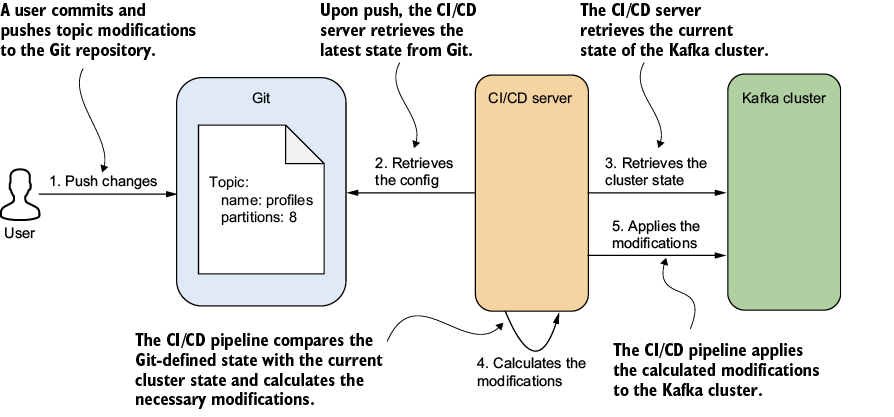
Trace the flow from a Git configuration update through state comparison to applied Kafka cluster modifications. section 10.2.2













