Intended purpose is the use a system is meant for, including its specific context and conditions. It helps determine risk classification: systems using similar technology may fall into different categories because they serve different purposes. section 7.2
Reassess the intended purpose when actual use diverges from the approved scope. Signals can include:
- New input or output types, tool calls, user groups, or downstream decisions. section 7.2
- A new use that makes a system high-risk, or a substantial modification that changes its purpose or compliance in an unforeseen way. section 7.3.2
Purpose changes the classification
ClaimAssist began as a customer FAQ bot with predefined answers and no claims data access. Adding payment-plan eligibility assessments based on claims and payment data changed its purpose and risk classification. section 7.2
A deployer that changes a system’s intended purpose may become its provider if the new use is high-risk. Deployer evidence should show that the system was configured for its intended use and operated as designed. section 7.3.2 section 7.4.3
Figure 7.3 Classification and role decision tree. The tree produces a risk classification output
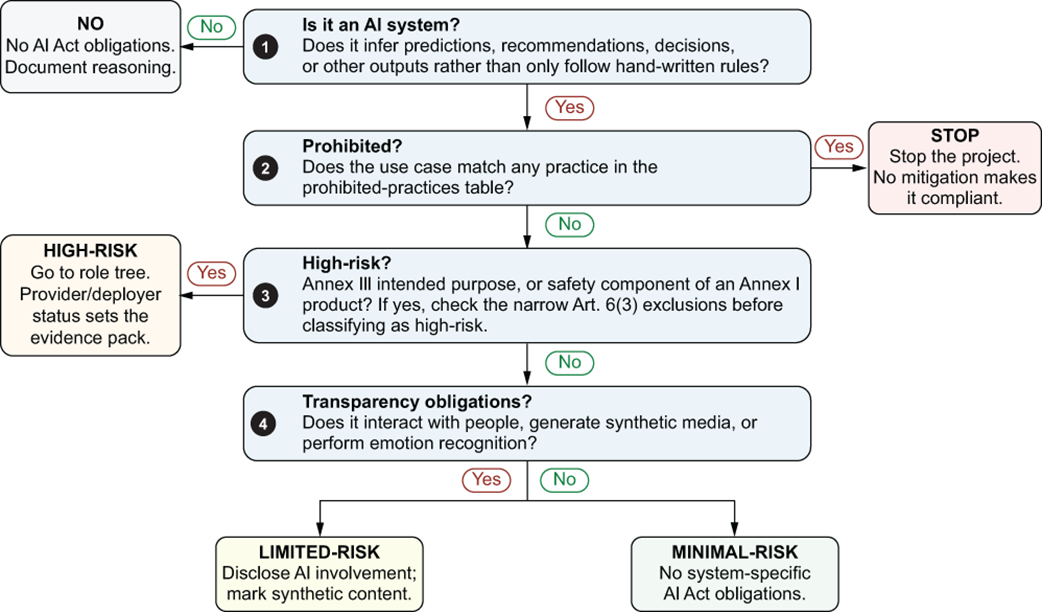
Use the classification decision tree to situate intended purpose within the system’s risk-classification workflow. section 7.2
