An interest rate measures the cost of borrowing or the return on lending money over a specified period, commonly expressed annually. In investment analysis, it is an input that can influence sectors, borrowing costs, bond values, and share prices. section 2.2.1 section 5.5
Use interest rates as a scenario variable rather than a prediction guarantee:
- Lower rates can make borrowing cheaper, encourage investment, and support capital-intensive companies, while also contributing to inflation or speculative manias. section 11.2.5
- Higher rates can make financing more expensive and weaken companies with substantial cash needs, although some may fail if they lack stable cash inflows. section 4.2.2 section 11.2.5
- Central-bank rates also affect fixed-income assets: bond payment terms vary, and bond values respond significantly to Federal Reserve policy. section 5.5
Capital-intensive shares
A speculative hypothesis links falling federal interest rates with a rebound in LiDAR share prices after expensive financing contributed to investor concern. The downside remains substantial: the analyzed stocks fell more than 95% from their highs, and bankruptcy could eliminate the investment. section 4.2.2 section 11.2.5
Figure 4.5 The interest rate at which depository institutions trade federal funds (Source: https://fred.stlouisfed.org/series/DFF)
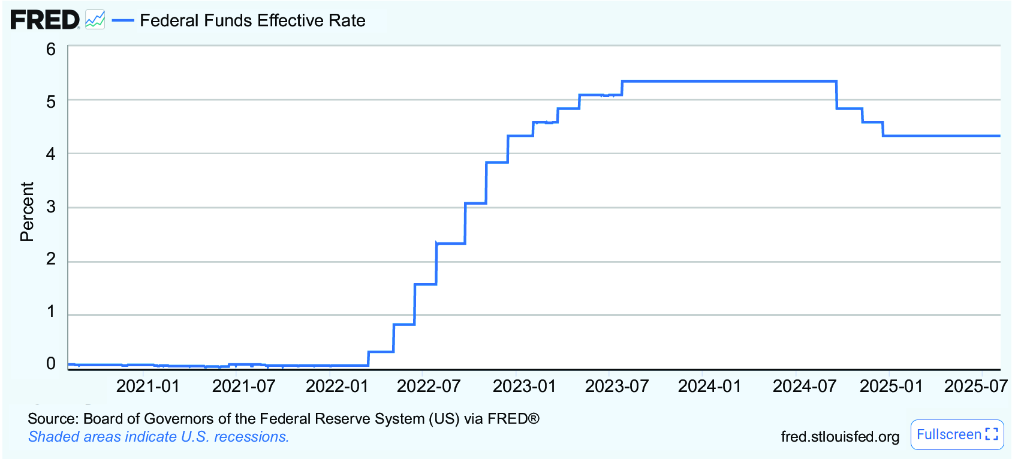
Use the federal-funds-rate figure to inspect the rate series alongside historical share-price movements. section 4.2.2
