The Internet of Things (IoT) connects physical devices to networks so they can exchange data and interact with systems. Sensors collect information such as temperature or motion; actuators receive commands and take physical actions. Device gateways can bridge the Internet and the specialized signals or protocols used by IoT devices. section 11.4.3
Connected sensors and actuators can automate monitoring and remote control in homes, buildings, and industrial settings. Many IoT devices have limited built-in security, so organizations should protect them with network segmentation, monitoring, and defense in depth. section 11.4.3 section 12.11
Home IoT
A smart thermostat, light, lock, or camera can be monitored or controlled remotely. Home automation can also make devices respond to schedules, user preferences, or events such as motion or temperature changes. section 11.4.3
Figure 11.4 Illustration of the main types of IoT setups connected to the Internet
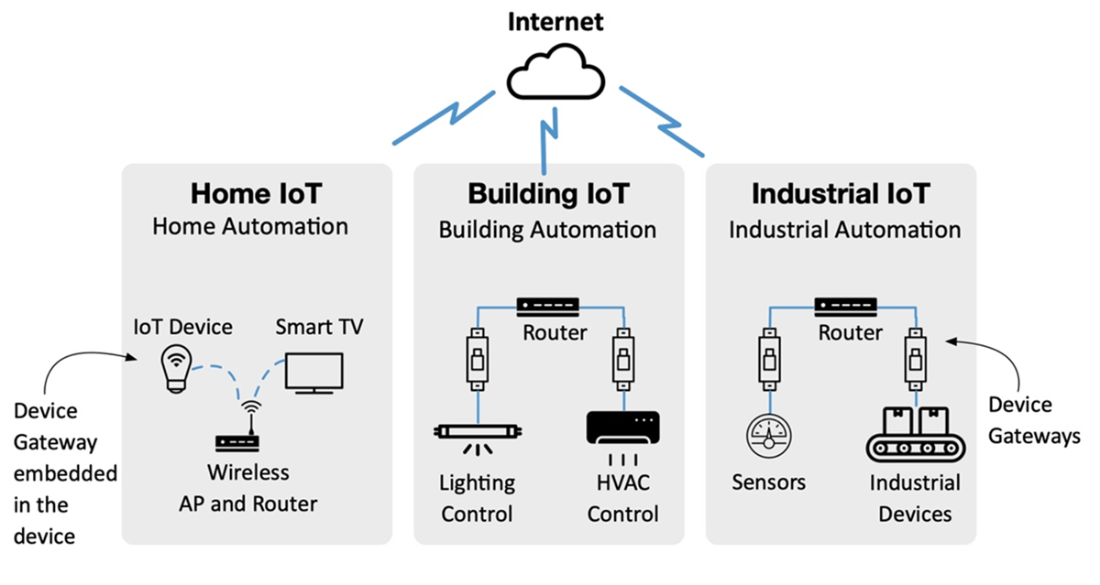
Illustrates common types of IoT setups connected to the Internet. section 11.4.3
