Knative extends Kubernetes into a portable platform for container-based serverless workloads. It hides scaling, traffic management, and observability complexity while allowing developers to package code and dependencies in containers and tune settings such as concurrency and instance limits. section 9.2 section 9.2.1
Knative’s deployment and operating model includes:
- Serving deploys and serves container-based workloads, supports revisions, and manages application traffic. section 9.4
- Eventing orchestrates events from different sources through channels, brokers, and optional source extensions. section 9.3.5 section 9.4
- Traffic routing uses a service-mesh gateway, with Istio, Gloo, Ambassador, Contour, and Kourier among the supported options. section 9.3
- Teams can operate Knative on virtual machines or bare metal wherever Kubernetes runs, or select a managed service to avoid managing the platform. section 9.3
Installation outline
Install Knative as a Kubernetes application using YAML files or an operator. Serving requires custom resource definitions, core components, networking, DNS, and optional extensions; Eventing adds its definitions, core components, default channel, broker, and optional sources. Observability components can follow. section 9.3.5
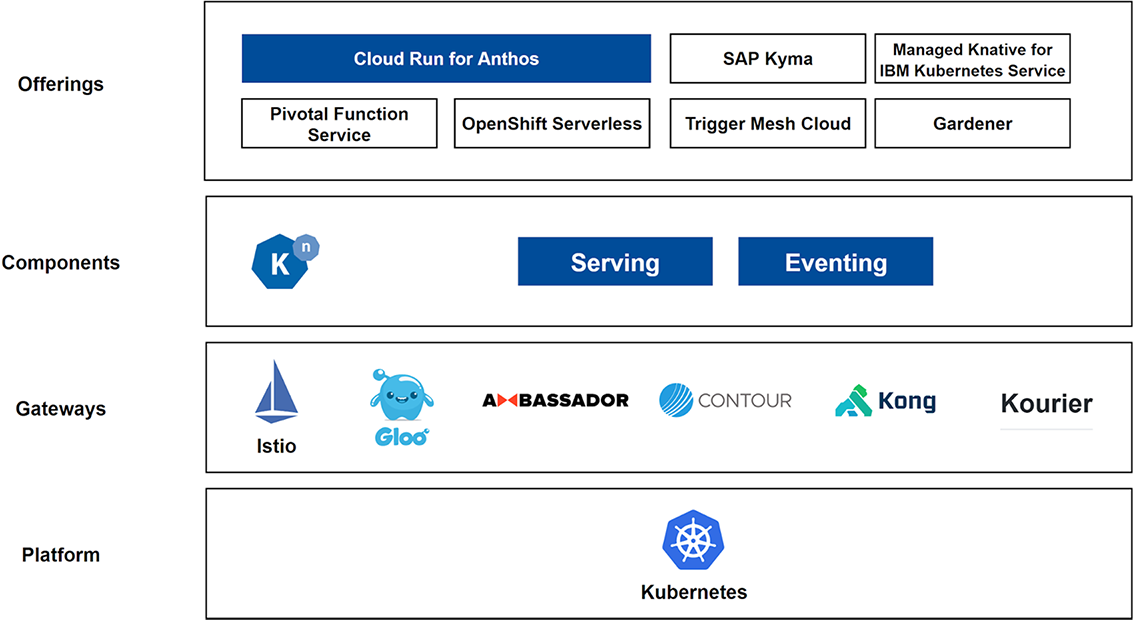
Use the architecture diagram to trace Kubernetes infrastructure, networking, Knative components, and optional or independently operated layers. section 9.3


