Lateral movement is an attack technique in which an adversary uses one compromised resource or account to reach additional resources. In a cloud environment, movement may spread across virtual machines, databases, storage, IoT devices, and other resource types, increasing the potential impact of a breach. section 1.5
Reduce the opportunity for lateral movement by combining controls across the attack path:
- Protect identities with Microsoft Entra ID, detect suspicious logins, and require multifactor authentication when appropriate. section 1.8.1
- Apply additional protection to privileged identities, including password changes when identity protection detects possible compromise. section 1.8.1
- Use Microsoft Sentinel to detect suspicious behavior and contain it through automated response. section 1.8.1
- Secure workloads, monitor continuously, investigate suspected compromise, respond, and incorporate findings into the next security cycle. section 1.3
From an exposed VM to broader compromise
A virtual machine with publicly accessible ports and weak account protection can expose credentials to attack. After compromising the VM account, an adversary may move into other resource types, establish broader control, and pursue an objective such as installing a crypto miner or demanding ransom. section 1.5
Figure 1.2 The kill chain model helps visualize the steps that bad actors may perform to compromise your Azure environment.
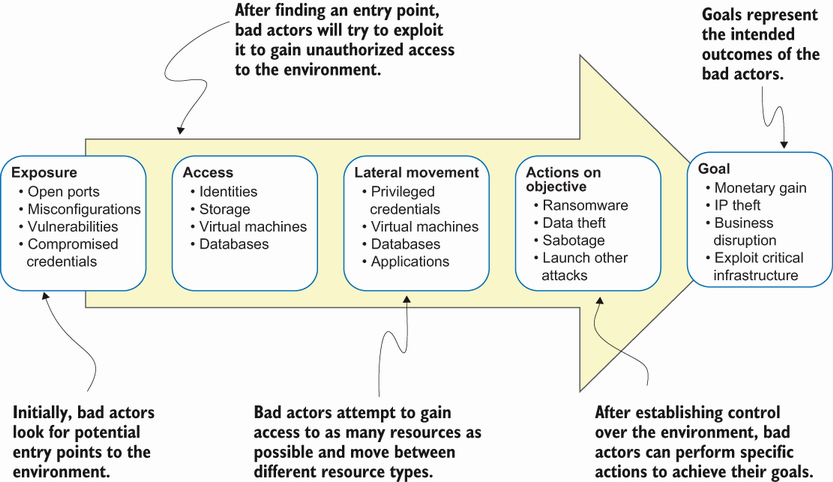
Use the kill chain visualization to locate lateral movement between initial access and actions on the objective. section 1.5
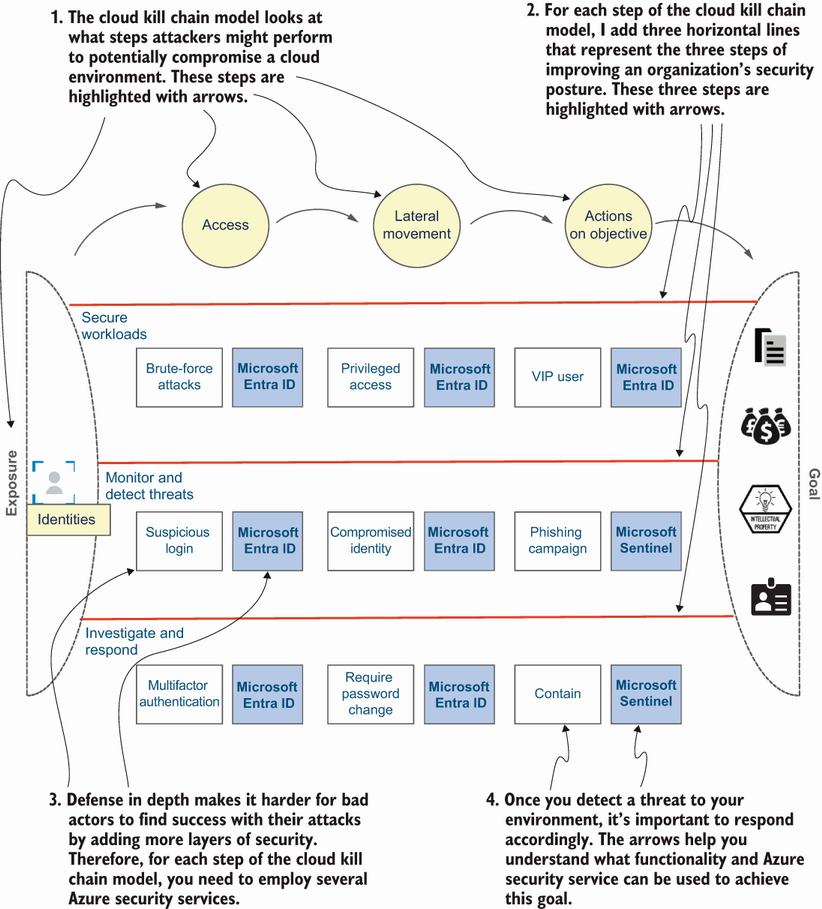
Use the identity-security diagram to connect suspicious identities, MFA, privileged access protection, and automated containment. section 1.8.1


