Lateral movement is an attacker's progression between systems or network segments after gaining an initial foothold. In API infrastructure, segmentation limits what a compromised service can reach. section 9.0 section 9.2
Reduce opportunities for movement between exposed and sensitive services:
- Channel inbound traffic through a DMZ, keep services in private subnets, and use hardened bastion servers for controlled internal access. section 9.0 section 9.2
- Isolate services containing sensitive data and apply stricter access controls and enhanced monitoring to their networks. section 9.2
- Declare internet-facing endpoints through an API gateway while keeping testing and back-office endpoints internal. section 9.2
Appointments and medical records
A healthcare application separates its appointment-management service from its medical-records service. If attackers compromise the appointment API, the isolated network prevents them from reaching medical-record data. section 9.2
Figure 9.12 Using a combination of API gateway and bastion server, we make sure that our APIs expose only well-documented, tested, secure endpoints to the internet while keeping internal endpoints or endpoints in development accessible only by internal users and developers.
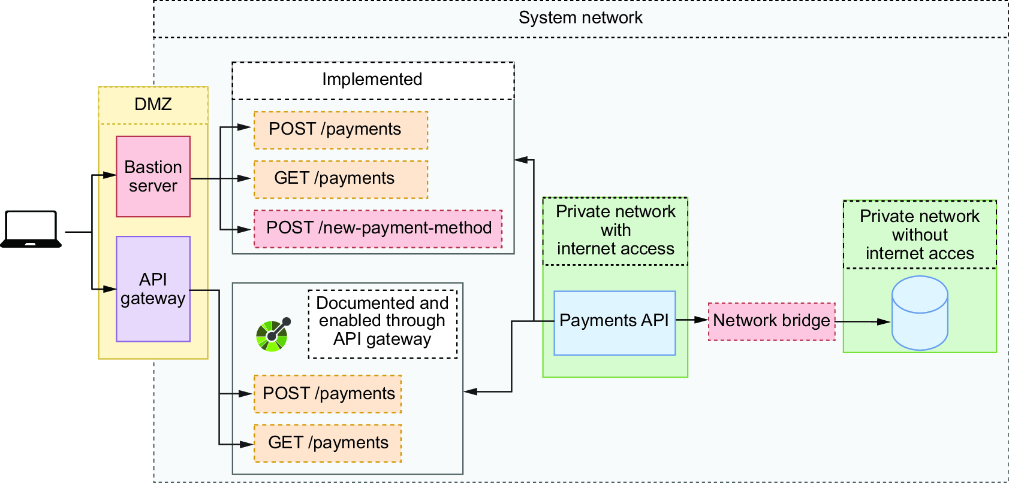
The API gateway and bastion-server arrangement keeps documented, tested, secure endpoints public while restricting internal and development endpoints. section 9.2


