liveBook · Manning

Log aggregation

As explained in Microservices Patterns, Second Edition

Log aggregation is the centralized collection and organization of log records from multiple application components or instances.

Log aggregation collects service activity logs in a centralized logging server, where they can be searched and used for alerting. It helps diagnose microservice problems when a request passes through multiple services and no single instance log tells the whole story. section 7.6.2

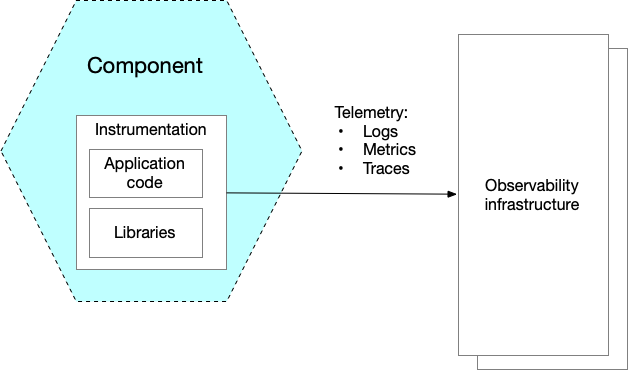
Services emit telemetry through developer-written instrumentation; operations provide infrastructure to collect, store, and analyze it. section 5.6.2

Figure 5.20 Observability requires collaboration between developers and operations. Developers create services that are instrumented to emit telemetry. Operations provide the infrastructure services that collect, store and analyze the telemetry.
about observability

The diagram shows how developer instrumentation and operations infrastructure work together to produce observable services. section 5.6.2


How Microservices Patterns, Second Edition covers it

How deep it goes
Defines centralized collection, search, and alerting, while deferring detailed pattern treatment.
Examples
Uses a request passing through multiple services to show why one instance’s log file is insufficient.
What you can do after
Diagnose microservice problems by searching centrally gathered service logs and using alerts.
How it connects
Connects observability with instrumentation, distributed tracing, health checks, exception tracking, application metrics, and audit logging.

Also explained in

Compare how 5 books explain log aggregation →

Related concepts

This explainer was generated by Manning's knowledge graph from the text of Microservices Patterns, Second Edition. The section links point to the parts of the book it draws on.


