Audit
An audit is a systematic examination of records, activities, systems, or controls against defined criteria to assess compliance, correctness, or accountability.

Effective Data Analysis
An audit is a systematic examination of a system, process, or output against defined requirements or evaluation criteria.
- How it is used
- Audits automated hiring and promotion systems for disparate rankings, ratings, and selection rates.
- How deep it goes
- Frames bias through scoring and selection comparisons but does not provide a complete audit procedure or statistical test.
- Examples
- Uses candidate-ranking software, keyword rules, quality scores, and automated rejection thresholds as audit targets.
- What you can do after
- Diagnose/debug with it by comparing automated rankings, ratings, and selection rates across protected groups.
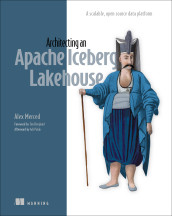
Architecting an Apache Iceberg Lakehouse
Auditing is the systematic examination and recording of data and system activities to support accountability, compliance, and operational assurance.
- How it is used
- Guides platform planning and operational assurance by connecting stakeholder needs, requirements, metadata, lineage, and governance.
- How deep it goes
- Explains audit architecture and workflows through Iceberg metadata, integrations, queries, and lineage correlation.
- Examples
- Uses snapshot queries, OpenLineage run events, and recent-commit counts to inspect changes, lineage, and activity patterns.
- What you can do after
- Diagnose/debug with it by tracing table changes, identifying responsible jobs or users, and detecting unusual activity patterns.
Read how Architecting an Apache Iceberg Lakehouse explains audit →
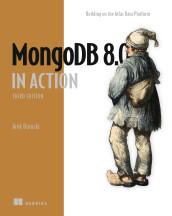
MongoDB 8.0 in Action, Third Edition
Auditing is the recording and review of security-relevant database activity for accountability and compliance.
- How it is used
- Monitors Atlas administration, database operations, authentication attempts, and authorization outcomes for oversight.
- How deep it goes
- Explains audit scopes, event types, filtering choices, retention, and performance trade-offs, but does not detail deployment procedures.
- Examples
- Uses an authCheck JSON event and distinguishes Control Plane, database, and SPI audit logs.
- What you can do after
- Operate/configure Atlas auditing through the Atlas UI or API and select database events while weighing successful-operation logging costs.
Read how MongoDB 8.0 in Action, Third Edition explains audit →
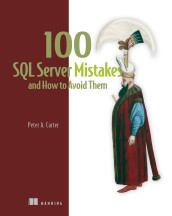
100 SQL Server Mistakes and How to Avoid Them
Auditing is the systematic recording and review of security-relevant actions and events for accountability and investigation.
- How it is used
- Uses auditing as passive security for reviewing administrative activity and preserving accountability around privileged accounts.
- How deep it goes
- Defines auditing and explains its security purpose, but stops short of implementation steps or diagnostic commands.
- Examples
- Uses unaudited administrative activity and xp_cmdshell-related privileged actions as concrete security scenarios.
- What you can do after
- Configure auditing for privileged accounts and combine it with least privilege and alerting to support nonrepudiation.
Read how 100 SQL Server Mistakes and How to Avoid Them explains audit →
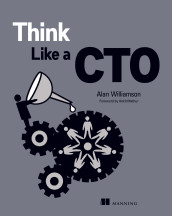
Think Like a CTO
An audit is a systematic examination of records, controls, or activities to verify compliance, accountability, or correctness.
- How it is used
- Uses classified data and system logs to support security oversight, forensic tracking, and organizational accountability.
- How deep it goes
- Connects auditing to ownership, retention, visibility, and continuous log review, but stops short of a detailed audit methodology.
- Examples
- Uses data categories, forensic logs, aggregated dashboards, and successful or failed login records as audit evidence.
- What you can do after
- Diagnose suspicious activity and support accountability by defining data rules and continually reviewing system and login logs.
Also covered in
- Kargo in ActionIn early access (MEAP)
- Data-Oriented Programming in JavaIn early access (MEAP)
- Authorization in Action
- Machines that ThinkIn early access (MEAP)
- Event Processing in Action
- Digital Twins in Action
- How Large Language Models Work
- Azure Security
- Build Financial Software with Generative AI (From Scratch)
What to know first
- GDPRThe General Data Protection Regulation (GDPR) is a European Union regulation governing the processing and protection of personal data and establishing related rights for individuals.
- HIPAAHIPAA is a United States federal law establishing requirements for the privacy, security, and handling of protected health information and related healthcare transactions.
- language modelA language model is a computational model that represents patterns in linguistic sequences to assign probabilities, predict, generate, or evaluate language.
- personal dataPersonal data is information relating to an identified or identifiable individual, directly or indirectly, alone or in combination with other information.
Related concepts
- loguses · A log is a time-ordered record of events, messages, or activity generated by a system or process.
- alertingproduces · Alerting is the generation and delivery of notifications when monitored conditions or events meet defined criteria or require attention or action.
- biasmeasures · Bias is a systematic tendency or deviation that distorts measurements, estimates, judgments, or outcomes relative to a relevant reference or target.
- bias detectionhas part · Bias detection is the systematic assessment of data, decisions, or system behavior to identify distortions or unjustified disparities across groups or conditions.
Questions about audit
What is audit?
An audit is a systematic examination of records, activities, systems, or controls against defined criteria to assess compliance, correctness, or accountability.
Which Manning books explain audit?
Effective Data Analysis, Architecting an Apache Iceberg Lakehouse, MongoDB 8.0 in Action, Third Edition, 100 SQL Server Mistakes and How to Avoid Them and Think Like a CTO.
What should I know before learning audit?
Manning books that teach audit usually introduce GDPR, HIPAA, language model and personal data first.
What kinds of audit are there?
Kinds of audit include SAS 70 audit and audit script.
What are the parts of audit?
Audit includes bias detection.
What is audit also called?
Audit is also called auditing.
These guides are generated from the text of Manning books by Manning's knowledge graph and link to the sections they draw on. The full books are available on liveBook and at manning.com.