An audit systematically examines an automated system’s outputs against defined fairness criteria. In hiring and promotion, it helps reveal whether rankings, ratings, or selections differ across protected groups. section 8.2.2
A practical bias audit asks whether automated decisions:
- Produce different candidate rankings or ratings by race, ethnicity, sex, or intersecting protected groups. section 8.2.2
- Select candidates at different rates across protected classes. section 8.2.2
- Create downstream effects that stakeholders would not otherwise anticipate. section 8.2.2
Hiring-system audit
Examine a vendor’s candidate quality score, an internal keyword-matching system, or machine-learning ranking tool, then compare scoring and selection outcomes across protected groups. section 8.2.2
Figure 8.5 The categorization system developed by the data science and analytics team can streamline the work of the customer support team. Still, it may have an unanticipated negative effect on certain groups of customers.
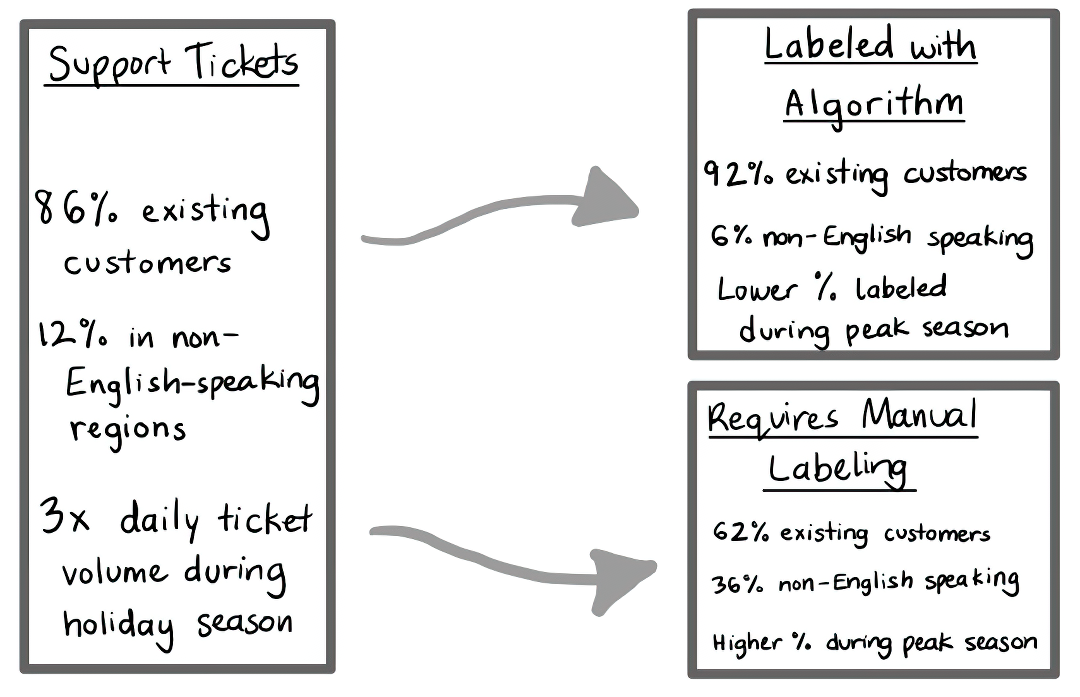
Use the figure to connect operational efficiency with the possibility of unintended negative effects on particular groups. section 8.2.2




