liveBook · Manning

Audit

As explained in Architecting an Apache Iceberg Lakehouse

Auditing is the systematic examination and recording of data and system activities to support accountability, compliance, and operational assurance.

Auditing clarifies what a data platform must deliver before architecture, vendors, infrastructure, or deployment models are selected. It connects stakeholder discovery to actionable requirements and reduces the risk of optimizing for the wrong problem. section 4.1

A lakehouse audit can combine:

  • Immutable Iceberg snapshots recording commits, timestamps, files, operations, and user identifiers. section 11.2
  • Schema-history inspection for added, removed, or changed fields and data types. section 11.2
  • Catalog, query-engine, and lineage integrations for tracing access, usage, and downstream data flow. section 11.2 section 11.2.7

Inspecting recent table activity

Query snapshot metadata ordered by commit time to identify the latest operations and their associated users: SELECT snapshot_id, operation, committed_at, user_id FROM my_catalog.db.table.snapshots ORDER BY committed_at DESC; section 11.2.7

Figure 4.1 The journey from gathering information to establishing requirements and implementing a solution
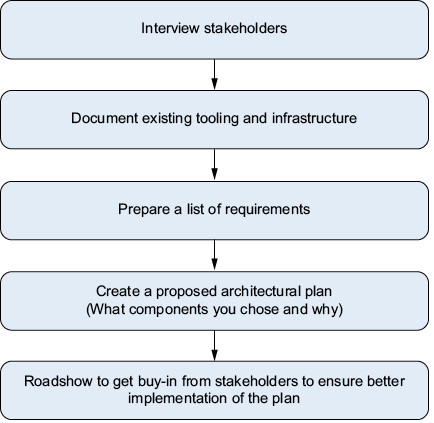
Follow the audit-to-implementation path from gathering information through requirements and solution implementation. section 4.1


How Architecting an Apache Iceberg Lakehouse covers it

How deep it goes
Explains audit architecture and workflows through Iceberg metadata, integrations, queries, and lineage correlation.
Examples
Uses snapshot queries, OpenLineage run events, and recent-commit counts to inspect changes, lineage, and activity patterns.
What it assumes
Assumes a data-platform or lakehouse context while framing requirements before introducing implementation choices.
What you can do after
Diagnose/debug with it by tracing table changes, identifying responsible jobs or users, and detecting unusual activity patterns.
How it connects
Connects Apache Iceberg with schema evolution, metadata tables, catalogs, access control, data lineage, and OpenLineage.

Also explained in

Compare how 5 books explain audit →

Related concepts

This explainer was generated by Manning's knowledge graph from the text of Architecting an Apache Iceberg Lakehouse. The section links point to the parts of the book it draws on.


