In software development, management shifts much of a developer’s work from daily coding toward guiding teams, budgets, hiring, and business priorities. Developer experience can support the role, but management and technical leadership call for different skills. section 2.1.4 section 12.3
Management responsibilities and practical considerations include:
- Hire for specific contributions and complementary team skills; assess what candidates did, not just the importance of their projects. section 2.1.4
- Handle difficult conversations and conflicts, and support employees’ success to reduce costly turnover. section 2.1.4
- Work with lead developers on budgets, staffing decisions, and AI-tool policies so plans fit technical capabilities and business objectives. section 12.3
- Consider whether you want to trade daily coding for management; remaining a senior or lead developer is also a valid career path. section 2.1.4
A lead developer’s input
A lead developer can advocate for project funding, identify the skills a team needs, and help set practical and ethical guidelines for AI tools. Without that input, decisions may misfit technical capacity and contribute to delays, budget overruns, or low morale. section 12.3
Figure 2.2 Software development career trajectory
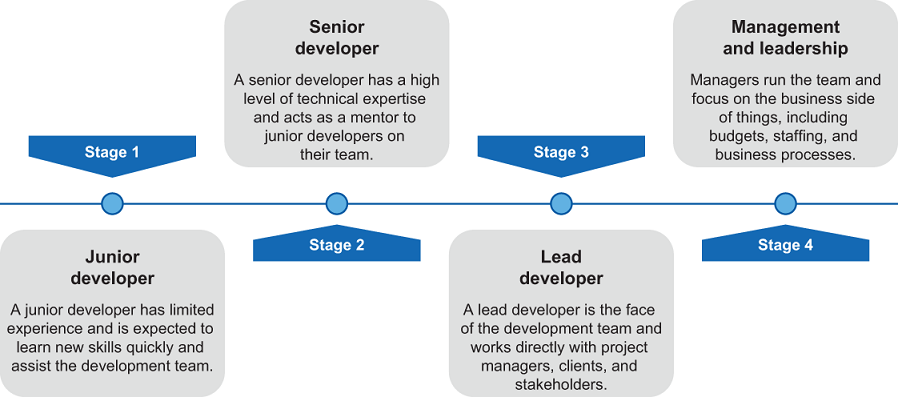
Use the career trajectory diagram to place management alongside development career paths. section 2.1.4

