A leadership style is the way a leader guides people, makes decisions, and supports a team. For a lead developer, finding a style is not a one-time choice. Team members, project needs, and workplace cultures differ, so an effective approach can draw on several styles and change with the situation. section 1.3.3 section 3.2
Common styles emphasize different ways of working:
- Autocratic leaders decide without team input; democratic leaders seek input before deciding. section 3.2.1
- Transformational leaders motivate people toward a shared vision; visionary leaders establish and communicate a compelling future direction. section 3.2.1
- Transactional leaders set expectations and link performance to rewards or consequences; coaching leaders guide people as they develop skills. section 3.2.1
- Servant leaders focus on team members’ needs and growth; affiliative leaders emphasize relationships and harmony. section 3.2.1
- Laissez-faire leaders let team members make their own decisions; commanding leaders issue orders, often under pressure. section 3.2.1
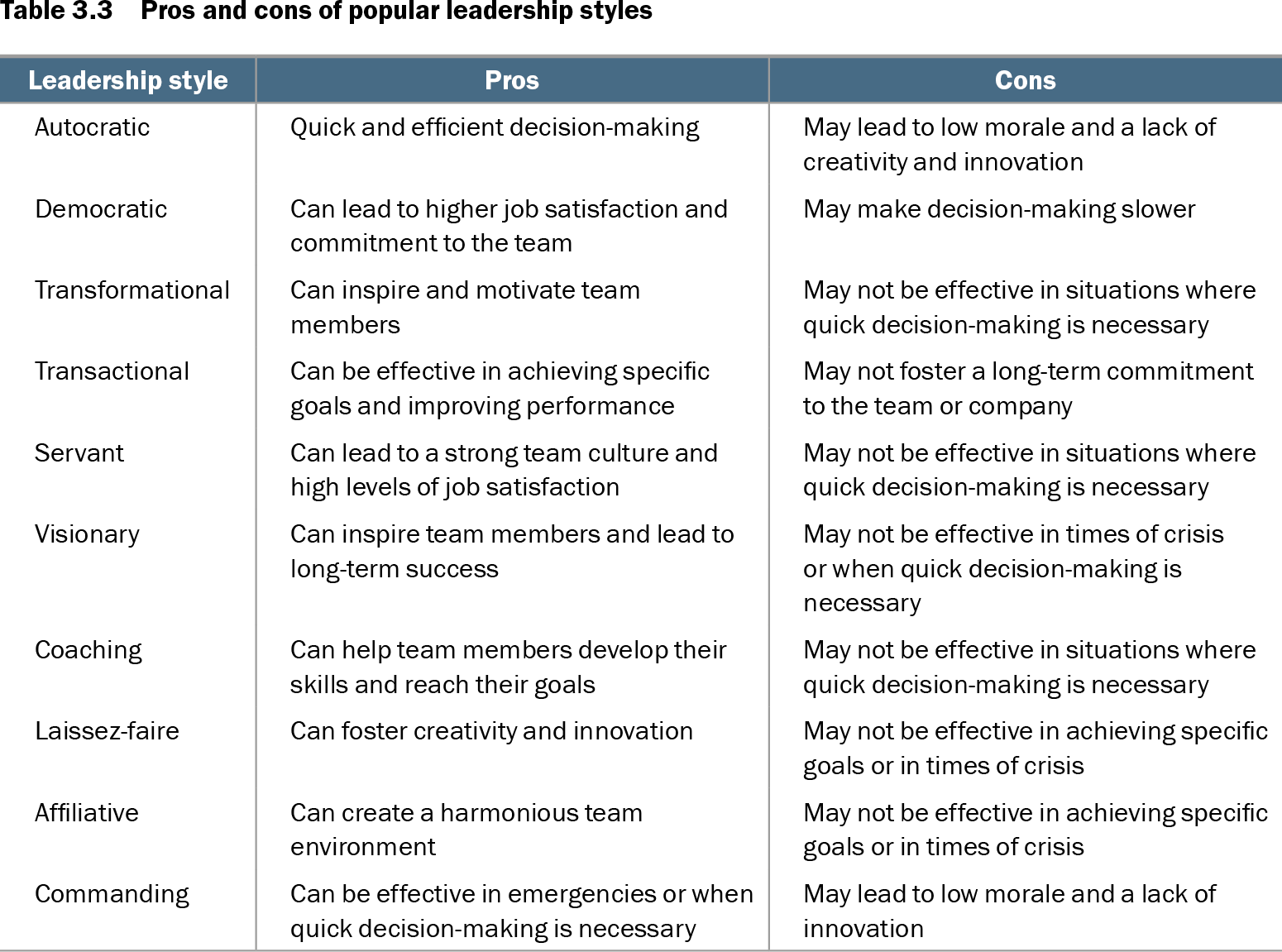
Table 3.3 Pros and cons of popular leadership styles (view table figure)
| Leadership style |
Pros |
Cons |
|---|---|---|
| Autocratic |
Quick and efficient decision-making |
May lead to low morale and a lack of creativity and innovation |
| Democratic |
Can lead to higher job satisfaction and commitment to the team |
May make decision-making slower |
| Transformational |
Can inspire and motivate team members |
May not be effective in situations where quick decision-making is necessary |
| Transactional |
Can be effective in achieving specific goals and improving performance |
May not foster a long-term commitment to the team or company |
| Servant |
Can lead to a strong team culture and high levels of job satisfaction |
May not be effective in situations where quick decision-making is necessary |
| Visionary |
Can inspire team members and lead to long-term success |
May not be effective in times of crisis or when quick decision-making is necessary |
| Coaching |
Can help team members develop their skills and reach their goals |
May not be effective in situations where quick decision-making is necessary |
| Laissez-faire |
Can foster creativity and innovation |
May not be effective in achieving specific goals or in times of crisis |
| Affiliative |
Can create a harmonious team environment |
May not be effective in achieving specific goals or in times of crisis |
| Commanding |
Can be effective in emergencies or when quick decision-making is necessary |
May lead to low morale and a lack of innovation |
Compare the styles’ advantages and drawbacks before deciding which might fit a particular team or situation. section 3.2.1
Start with supportive approaches such as transactional, servant, coaching, and transformational leadership. Be prepared to take a more visionary role later or a commanding role in an emergency. No style fits every decision: asking for input can strengthen commitment but slow a decision, while deciding alone can be quick but hurt morale or creativity. section 3.5 section 3.2.1
Adjust to the team
An experienced, self-motivated team may need room to work with a more hands-off, servant-leadership approach. A less experienced team may need more guidance. Notice how people respond rather than assuming they all want the same level of direction or personal connection. section 11.2.1
To develop your approach, reflect on your strengths and weaknesses, observe how other managers run meetings and projects, and ask colleagues, supervisors, and team members for candid feedback. Use that feedback to adjust how you communicate, delegate, and support people. Then check back in: leadership also means following through, sharing information, and keeping the team aligned as plans change. section 3.1.2 section 2.2.4 section 12.2.3 section 1.3.3